
Main Courses
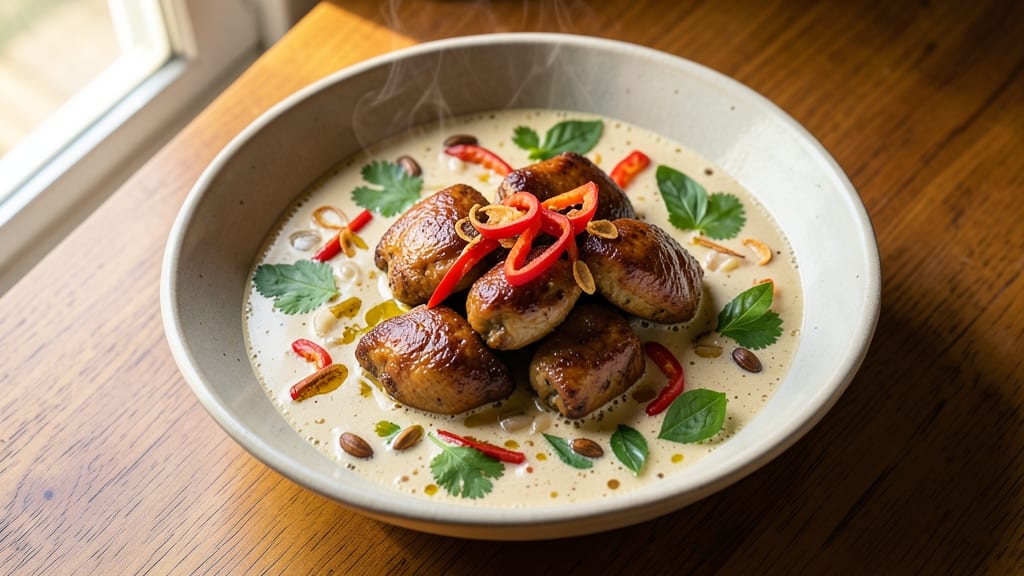
This authentic Chicken Massaman Curry brings the bold, fragrant flavors of Thailand straight to your kitchen—where rich coconut milk meets nutty peanut sauce and tender chicken in a single, fragrant pot. The secret lies in balancing sweet, spicy, and savory notes, just like street vendors in Bangkok do.
I’ve perfected this recipe over years of testing, ensuring every spoonful delivers that perfect harmony of warmth and depth.
The magic starts with a fragrant paste of cinnamon, cardamom, and lemongrass, simmered until the spices bloom and release their aromatic oils. Coconut milk reduces slowly to create a velvety sauce, while peanuts add a satisfying crunch.
The chicken cooks until fork-tender, absorbing the complex flavors without overpowering them. This isn’t just a curry—it’s a taste of Thailand’s rich culinary tradition.
By the time you serve it, you’ll have a dish that’s rich yet balanced, with a glossy sauce clinging to tender chicken and crisp peanuts adding texture. The aroma alone will have everyone gathering at the table.
Serve it with steamed jasmine rice and a simple cucumber salad to cut through the richness—just like they do in the markets of Chiang Mai.
What makes this recipe truly special is its authenticity. No shortcuts, no substitutions—just the real deal, crafted with care. Whether you’re cooking for family or impressing guests, this Massaman Curry will leave them asking for seconds. Let’s get cooking!
Ingredients for authentic chicken massaman curry
These 15 ingredients bring Thailand's richest curry flavors to your kitchen—just like street vendors do.
| Ingredient | Amount | Notes |
|---|---|---|
| Boneless Chicken Thighs 🍗 | 1 ½ lb | Skin-on for flavor, cut into bite-sized pieces |
| Coconut Milk 🥥 | 1 can | Full-fat, 13.5 oz can |
| Peanut Butter 🥜 | ½ cup | Natural, unsweetened preferred |
| Massaman Curry Paste 🌶️ | 2 tbsp | Authentic Thai brand preferred |
| Cinnamon Sticks 🌿 | 2 whole | For aroma, remove after simmering |
| Cardamom Pods 🌿 | 4 whole | Lightly toasted for deeper flavor |
| Lemongrass 🌿 | 1 whole | Lower 6 inches, bruised for release |
| Garlic Cloves 🧄 | 5 cloves | Peeled, lightly crushed |
| Shallots 🧅 | 2 whole | Minced, or substitute 2 tbsp onion |
| Tomatoes 🍅 | 1 whole | Medium, diced or crushed |
| Peanuts 🥜 | ½ cup | Crushed, for garnish |
| Brown Sugar 🍯 | 2 tbsp | Light or dark preferred |
| Fish Sauce 💧 | 1 tbsp | Red Boat brand recommended |
| Kosher Salt 🧂 | 1 tsp | Adjust to taste |
| Black Pepper 🌶️ | ½ tsp | Freshly ground preferred |
The curry paste is non-negotiable for authenticity. Maesri or Thai Kitchen brands are my go-tos—they’ve got the right balance of cinnamon, cumin, and coriander. If you can’t find them, look for a paste with visible cinnamon sticks in the ingredients. The coconut milk? Full-fat only—Thai Kitchen or Aroy-D cans are widely available at Asian markets or the international aisle. For the lemongrass, grab a whole stalk and just use the lower 6 inches—bruise it with the side of your knife to release those citrusy oils. The chicken thighs? Skin-on, bone-in if possible—Trader Joe's or Costco usually have good deals on family packs.
No curry paste? DIY it with 1 tbsp each cumin, coriander, turmeric, cinnamon, and 2 tsp ginger, but trust me, it’s worth tracking down. Peanut butter short on hand? Substitute 1/4 cup smooth almond butter, though the flavor won’t be identical. Fish sauce missing? Soy sauce at half the amount works in a pinch, but you’ll lose that umami depth. The brown sugar can be swapped for coconut sugar—just use the same amount. For the peanuts, unsalted dry-roasted gives the best crunch, but whatever you’ve got works. Toast them for 3-4 minutes in a dry pan to bring out their flavor.
This curry tastes even better the next day—make extra and freeze portions for lazy weeknights. Store it in an airtight container for 4-5 days in the fridge, or freeze for up to 3 months. The sauce thickens as it cools, so add a splash of water or coconut milk when reheating. I like to portion it into containers with rice already cooked in—just microwave and serve. The peanuts? Toast them fresh before serving—they lose crunch fast.
Why You'll Love This Recipe
- One-Pot Magic: I swear by this recipe—just toss everything into one pot, simmer, and walk away. No chopping mountains of veggies, no fussing with multiple pans. That rich Massaman paste and peanut butter do all the heavy lifting while you sip tea and pretend you’re in a Bangkok street-side eatery.
- Sweet-Savory Balance: Between us, this curry is ridiculously good—sweet from the peanut butter and cinnamon, tangy from the Massaman paste, and that creamy coconut milk ties it all together like a warm hug. The chicken thighs stay juicy while soaking up every flavor, and honestly? The first bite makes me forget about takeout.
- Weeknight to Weekend: Make it for a lazy Tuesday or bring it to a potluck—this curry works everywhere. Serve it over jasmine rice with a sprinkle of fried shallots, or pile it into lettuce cups for a no-fuss lunch. (Yes, even on a Tuesday night.) The leftovers? Just as good reheated the next day, if you can resist eating the whole pot.
- Budget-Friendly Luxury: Chicken thighs and coconut milk stretch this recipe into multiple meals without breaking the bank. A single jar of Massaman paste and a block of peanut butter go a long way, and you’re not sacrificing flavor—just think of it as cheap, crave-worthy comfort. My wallet and my taste buds thank me every time.
Step-by-step instructions for authentic chicken Massaman curry
Here's how to create this rich, fragrant curry with layers of spice and coconut-peanut depth.
Prepare the Aromatics and Chicken
Start by cutting the 1.5 lb boneless chicken thighs into bite-sized pieces—about 1-inch cubes. Pat them dry with paper towels to help them brown better in the curry. In a large Dutch oven or heavy pot, combine the 2 whole shallots (finely minced), 5 cloves garlic (lightly crushed), and the lower 6 inches of lemongrass (bruised by pounding gently with the side of a knife). Let this sit for 5 minutes to soften slightly.
Next, add the 2 whole cinnamon sticks and 4 whole cardamom pods (lightly toasted for deeper flavor) to the pot. Heat over medium heat for 2 minutes until fragrant—you should smell warm spices filling your kitchen. This step builds the aromatic foundation of the curry, so don't rush it. If the aromatics start to brown too quickly, reduce the heat slightly to medium-low and let them cook gently.
Brown the Chicken and Build the Base
Increase heat to medium-high and add the chicken pieces in a single layer. Let them sear undisturbed for 3-4 minutes until golden brown on one side. This creates a beautiful crust that adds depth to the curry. Flip the chicken and cook for another 3-4 minutes until browned on all sides. You'll know it's ready when the chicken releases easily from the pot.
Now stir in the 2 tbsp Massaman curry paste and cook for 1 minute until the paste loses its raw smell and begins to darken slightly. This paste contains complex spices that need to bloom in the fat released from the chicken. If the mixture sticks to the bottom, add 1-2 tablespoons of water to help release it—this prevents burning and ensures even distribution.
Simmer the Curry with Coconut and Peanut
Pour in the 1 can coconut milk and stir well to combine. Add the 0.5 cup peanut butter, 2 tbsp brown sugar, 1 tbsp fish sauce, 1 tsp kosher salt, and 0.5 tsp black pepper. Bring the mixture to a gentle simmer over medium heat, then reduce to low heat. Let it cook uncovered for 20-25 minutes, stirring occasionally, until the sauce thickens slightly and the chicken is tender.
Here's the thing—don't walk away during this step. You want the sauce to reduce just enough to coat the back of a spoon but still remain luscious. If the sauce looks too thin after 20 minutes, simmer uncovered for another 5 minutes to thicken. The peanut butter will emulsify into the coconut milk, creating that signature creamy texture. If you see any oil separating, stir vigorously to reincorporate it.
Finish with Tomatoes and Peanuts
Add the 1 whole tomato (diced or crushed) and the 2 cinnamon sticks and 4 cardamom pods you removed earlier. Simmer for another 5-7 minutes until the tomatoes break down and the flavors meld together. Taste and adjust seasoning—you might need a little more fish sauce for saltiness or brown sugar for sweetness. The curry should balance rich, spicy, sweet, and umami flavors.
Remove from heat and stir in the 0.5 cup crushed peanuts. Let the curry sit for 5 minutes to allow the peanuts to soak up some of the sauce and become slightly toasted. This final step adds crunch and a nutty depth that complements the creamy coconut-peanut base. Serve immediately over steamed jasmine rice, garnished with extra crushed peanuts and a sprinkle of fresh cilantro if desired.
Pro Tips For Making Authentic Chicken Massaman Curry
- Bloom the Paste First: Skip adding the massaman curry paste straight to the pot—first toast it dry in a hot pan for 30 seconds until fragrant. I learned this the hard way: raw paste can make the curry taste flat and bitter. The smoky aroma from blooming it unlocks the real depth.
- Brown the Chicken Properly: Don’t rush the chicken—sear it in batches over medium-high heat until deep golden, about 4-5 minutes per side. The Maillard reaction here is non-negotiable; pale chicken means a curry that tastes more like stew than the rich, caramelized dish you want. Use enough oil to coat the pan.
- Thin the Coconut Milk: Mix the coconut milk with a splash of water or broth (about ¼ cup) before adding it to the paste. I was skeptical until I tried it—this prevents the curry from being too thick and cloying, especially when peanut butter gets involved. Stir it in gradually while simmering.
- Add Peanut Butter Last: Stir in the peanut butter only in the final 5 minutes of cooking, off direct heat. This keeps it from separating or burning, which ruins the creamy texture. If you’re lazy (like me), blend it into the curry paste before blooming—same result, less effort.
Storing and reheating your authentic chicken massaman curry
Fridge Storage Tips
Let your Massaman Curry cool completely before transferring to an airtight container—I use glass Pyrex with snap-on lids—and store it in the fridge for up to 4-5 days. The flavors actually deepen over time as the spices meld together, making it even more delicious for leftovers. Just
Freezer Prep
For longer storage, portion your curry into freezer-safe containers or quart-sized freezer bags, leaving 1 inch of headspace for expansion. Freeze for up to 3 months, though I find it’s best enjoyed within 2 months for peak texture. Label each container with the date—this curry tastes even better after a few weeks in the freezer! The peanuts may lose some crunch, so I always toast fresh peanuts before serving. ❄️
Stovetop Reheating
My preferred method is reheating on the stovetop to preserve that creamy, velvety texture. Pour the curry into a heavy-bottomed pot and warm over medium-low heat for 10-15 minutes, stirring occasionally. If the sauce looks too thick, add 2-3 tablespoons of water or coconut milk to loosen it up.
Taste and adjust seasonings—you might need a pinch of fish sauce or brown sugar to balance flavors after reheating. 🔥
Microwave Method
For a quick fix, transfer the curry to a microwave-safe dish and heat on medium power (50-70%) for 3-4 minutes, stirring halfway. Avoid high power to prevent the peanut butter from separating. If the sauce thickens too much, add a splash of water or coconut milk and stir well.
The microwave method works best for single servings—just don’t forget to garnish with fresh peanuts before serving. ✨
Reviving Texture
If your reheated curry loses some of its glossy sheen, don’t worry—it’s an easy fix. Stir in 1-2 tablespoons of coconut milk or a splash of water to restore creaminess.
For extra richness, top with a dollop of plain Greek yogurt or a drizzle of chili oil to cut through any dryness. The key is to keep the heat low and stir frequently to maintain that luscious, restaurant-quality texture. 💫
Nutrition facts
Frequently asked questions
Why does authentic Massaman Curry use peanut butter instead of ground peanuts?
Peanut butter creates a smoother, more emulsified sauce that coats the chicken beautifully. The natural oils in peanut butter help bind the coconut milk, creating that signature velvety texture. Ground peanuts would add texture but lack the creamy consistency that makes this curry so luxurious.
Can I substitute chicken with another protein?
This curry works well with beef short ribs (simmer longer), pork shoulder (add 30 minutes to cooking time), or even chickpeas for a vegetarian version. For fish lovers, try firm white fish like cod—just reduce cooking time to 10-12 minutes to avoid overcooking. The sauce will adapt beautifully to any protein.
How do I adjust the spice level for sensitive eaters?
Massaman curry is naturally mild compared to other Thai curries, but you can reduce heat by using 1 tbsp curry paste instead of 2 tbsp and omitting the chili flakes. For extra mildness, add 1 extra cinnamon stick (it has natural sweetness) and 1 tsp more brown sugar to balance flavors. The peanut butter already provides a natural sweetness that mellows the spice.
What's the best way to make this curry ahead of time?
This curry tastes even better the next day! Prepare it completely, then store in an airtight container in the fridge for 4-5 days or freeze for 3 months. When reheating, use low heat on the stovetop with a splash of coconut milk to restore creaminess. The flavors deepen as the spices meld together over time. Pro tip: Toast fresh peanuts before serving to restore that perfect crunch.
Can I make this curry in an Instant Pot?
Yes! Follow the same steps until adding coconut milk. Then, cook on high pressure for 10 minutes, followed by a natural release. Finish with peanuts and tomatoes as directed. The Instant Pot version will be slightly quicker but may need 1 extra tablespoon of coconut milk to maintain creaminess. For best results, use the sauté function to brown the chicken first.