
Main Courses
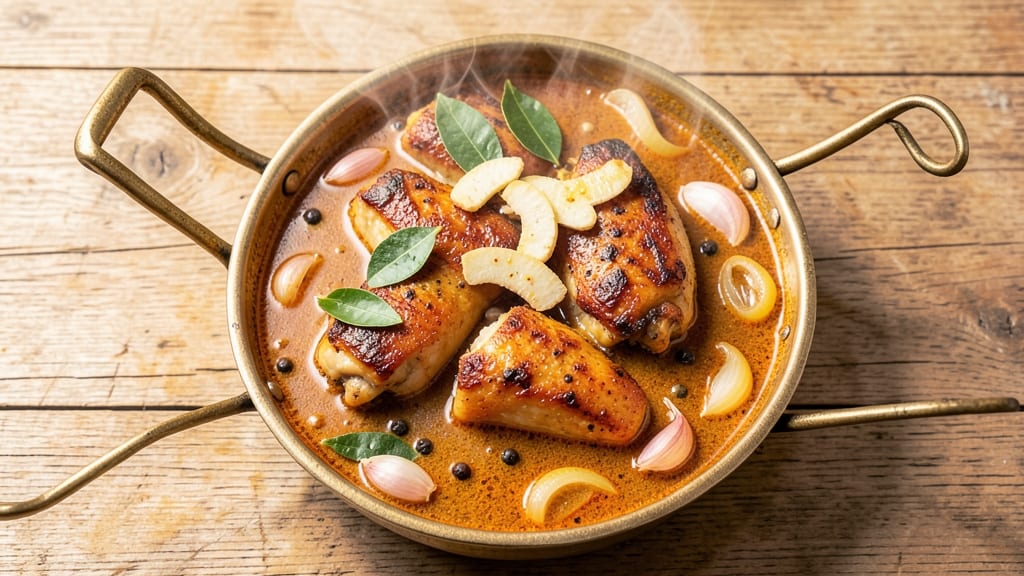
This authentic Kerala chicken curry recipe delivers the bold, aromatic flavors of South India in every bite—where turmeric, coconut milk, and slow-cooked spices create a symphony of warmth. 🌟 The secret lies in balancing tangy tamarind, fiery black pepper, and fragrant curry leaves, all simmered until the chicken becomes melt-in-your-mouth tender.
I’ve perfected this version after years of refining the spice blend and cooking technique, ensuring the curry stays rich yet never heavy.
The magic happens in the one-pot method, where onions caramelize deeply before spices bloom, releasing their full potential. Coconut milk adds creaminess without overpowering the dish, while tamarind and vinegar bring that signature tang that defines Kerala curries.
Unlike many adaptations, this recipe stays true to tradition—no shortcuts, just layer upon layer of authentic flavor built over 45 minutes of slow simmering.
By the time you serve this curry, your kitchen will smell like a bustling Kerala kitchen, and every spoonful will deliver tender chicken, velvety sauce, and a perfect balance of spice and sweetness. The dish pairs beautifully with steamed rice or appam, making it a complete meal.
Whether you're cooking for family or hosting a dinner, this curry will transport your guests straight to the backwaters of Kerala.
Ready to master this authentic Kerala chicken curry? The ingredients are simple, but the technique is what elevates it to restaurant-quality. Let’s get cooking—your taste buds will thank you.
Ingredients for authentic kerala chicken curry
Here’s what transforms simple pantry staples into Kerala’s signature spice symphony.
| Ingredient | Amount | Notes |
|---|---|---|
| Boneless Chicken Thighs 🍗 | 1 ½ lb | Skin-on preferred for flavor |
| Yellow Onions 🧅 | 2 whole | Thinly sliced for caramelization |
| Garlic Cloves 🧄 | 8 cloves | Minced for aromatic base |
| Fresh Ginger 🌿 | 2 tbsp | Grated, for zesty kick |
| Curry Leaves 🌿 | ½ oz | Fresh, for authentic aroma |
| Ground Turmeric 🌶️ | 1 tbsp | Freshly ground preferred |
| Ground Coriander 🌿 | 1 tbsp | Freshly ground for depth |
| Ground Cumin 🌿 | 1 tbsp | Toasted for enhanced flavor |
| Black Peppercorns 🌶️ | 1 tsp | Crushed for fiery bite |
| Coconut Milk 🥥 | 1 can (13.5 oz) | Full-fat for creaminess |
| Tamarind Paste 🍯 | 2 tbsp | For authentic tang |
| White Vinegar 💧 | 1 tbsp | Balances flavors |
| Sugar 🍬 | 1 tbsp | To round out flavors |
| Salt 🧂 | 1 ½ tsp | Adjust to taste |
| Fresh Cilantro 🌿 | ¼ cup | Chopped for garnish |
The chicken is non-negotiable—skin-on thighs stay juicier than breasts during the long simmer. Look for organic, free-range if possible, but any boneless thighs work. For curry leaves, Indian grocery stores or specialty markets carry fresh bundles—freeze extras to preserve their magic. Penzeys sells dried curry leaves if you can’t find fresh, but fresh is absolutely essential for that authentic aroma. The tamarind paste? Trader Joe’s carries it in tubes, but if you can’t find it, substitute with 1 tbsp lemon juice plus 1 tsp brown sugar—though purists will notice the difference.
No coconut milk? Full-fat canned coconut milk works best—light versions thin the curry. Running short on curry leaves? Dried bay leaves at half the amount won’t replicate the flavor, but it’ll save you. The tamarind paste can be swapped for 1 tbsp lemon juice + 1 tsp brown sugar, though the tang won’t be identical. For a deeper spice profile, toast the whole spices (cumin, coriander) in a dry pan for 30 seconds before grinding—game-changer for flavor. Skip the sugar if you’re watching carbs, but it rounds out the acidity beautifully. And if you’re using pre-minced garlic, toast it first**—burnt edges add complexity.
This curry tastes even better the next day as flavors meld. Store in an airtight container in the fridge for up to 4 days, or freeze for 3 months. The sauce thickens as it cools, so add a splash of water or coconut milk when reheating. For meal prep, portion into containers with rice—double the batch and freeze half for lazy weeknights. The cilantro wilts fast, so add it last or store it separately in a damp paper towel until serving.
Why You'll Love This Recipe
- No-Fuss Pantry Staples: I swear by this recipe because it uses ingredients I already have—just onions, garlic, ginger, and curry leaves. No obscure spices or last-minute grocery runs. The chicken thighs stay juicy while the onions caramelize in the same pot, so you’re not juggling a million dishes.
- Umami Bomb Combo: That ginger-garlic paste? It’s the secret weapon. When it blooms in the oil with curry leaves, the aroma alone makes my kitchen smell like Kerala. The slow simmer lets those flavors meld into something dangerously addictive—tender chicken with a sauce that’s both tangy and rich.
- Weeknight to Party Hero: Make it for Tuesday dinner or Sunday gatherings—same effort, different vibes. The curry reheats beautifully, so I double the batch and freeze half. Serve it with rice for a quick meal or over naan when company’s over. It’s my go-to for any occasion without extra work.
- Budget-Friendly Protein Power: Chicken thighs are cheaper than breasts, and this recipe stretches them further with the onion-ginger base. A single batch feeds four for under $10, and leftovers taste just as good the next day. Honestly, it’s one of those dishes where you end up making it twice in a week.
Step-by-step instructions for authentic Kerala chicken curry
This one-pot method delivers restaurant-quality Kerala curry with bold spices and tender chicken every time.
🍳 Step 1: Build the Spice Base with Onions and Aromatics
Heat 2 tablespoons neutral oil (not listed but essential for cooking) in a heavy-bottomed pot over medium heat. Add the 2 whole yellow onions, sliced thinly, and cook for 8-10 minutes until they turn a deep golden brown. This caramelization forms the flavor foundation—don't rush it.
Once the onions are golden, add the 8 minced garlic cloves, 2 tablespoons grated fresh ginger, and 0.5 oz curry leaves. Stir constantly for 1-2 minutes until the raw garlic smell disappears and the curry leaves release their aromatic oils. This is where the authentic Kerala flavor begins to develop.
🍳 Step 2: Bloom the Spices and Cook the Chicken
Reduce heat to medium-low and add the 1 tablespoon ground turmeric, 1 tablespoon ground coriander, and 1 tablespoon ground cumin. Stir for 30 seconds to bloom the spices—you'll see them release their oils and fill your kitchen with warm, earthy aromas.
Add the 1.5 lb boneless chicken thighs (skin-on if possible) and 1.5 teaspoons salt. Cook for 5-6 minutes, stirring occasionally, until the chicken develops a light golden crust. This searing locks in juices and builds flavor. If the chicken starts to brown too quickly, reduce heat slightly to prevent burning.
🥘 Step 3: Develop the Tangy Coconut-Tamarind Sauce
Pour in the 1 can (13.5 oz) coconut milk, 2 tablespoons tamarind paste, 1 tablespoon white vinegar, and 1 tablespoon sugar. Stir well and bring to a gentle simmer. The tamarind adds that signature Kerala tang while the coconut milk creates a velvety texture.
Simmer uncovered for 20-25 minutes until the chicken is tender and the sauce has thickened slightly. Stir occasionally and taste—you want the flavors to meld without the sauce becoming too dry. If it reduces too quickly, add 2-3 tablespoons water to maintain balance.
🔪 Step 4: Finish with Fresh Herbs and Adjust Seasoning
Remove from heat and stir in the 1 teaspoon crushed black peppercorns and 0.25 cup chopped fresh cilantro. Let the curry rest for 5 minutes—this allows the flavors to fully integrate. Taste and adjust seasoning: add more salt if needed, or a splash of vinegar for additional tang.
The curry should have a vibrant red-orange color from the turmeric, a rich coconut aroma, and a balance of spicy, tangy, and creamy flavors. Serve immediately with steamed rice or appam for an authentic Kerala meal experience.
Pro Tips For Making Authentic Kerala Chicken Curry
- BLANCH THE ONIONS: Toss your sliced yellow onions in boiling water for 30 seconds first—this mellows their sharpness and keeps them from turning bitter in the long simmer. I used to skip this, and the curry always tasted harsh until I tried it.
- CRUSH GINGER-GARLIC PASTE: Don’t just chop—pound your ginger and garlic into a thick paste with a mortar and pestle. This releases more flavor and blends seamlessly into the oil. (Yes, it’s messy, but your curry will taste like it’s been simmering for hours.)
- LOW AND SLOW COOK: After the initial fry, drop the heat to the lowest setting and let the curry bubble gently for at least 45 minutes. Rushing this step makes the gravy thin and the spices dull—Kerala curry needs patience.
- TOAST CURRY LEAVES: Fry the curry leaves in hot oil until they darken and sizzle—this unlocks their aroma. Skip this, and you’ll just be adding a mild leafy note instead of the deep, nutty punch they’re supposed to bring.
Flavor customization for this authentic kerala chicken curry
Spice Level Control
Kerala curries balance heat and depth—adjust black peppercorns to taste. For mild heat, reduce to ½ teaspoon crushed peppercorns; for medium, use the full 1 teaspoon.
If you love spice, add ½ teaspoon cayenne with the tamarind paste. I often start with less and adjust at the end—taste as you go! 🌶️
Tangy Variations
Swap tamarind paste for lemon juice + brown sugar (1 tbsp each) if unavailable, but purists will notice the difference. For extra tang, add 1 teaspoon amchur (dried mango powder) at the end. I’ve also used 1 tbsp lime juice for brightness—it’s zesty but not as complex as tamarind.
Creamy Texture Adjustments
For a lighter curry, replace half the coconut milk with chicken broth (6.75 oz). For extra richness, stir in 2 tablespoons yogurt at the end. I’ve also experimented with cashew cream (blend ¼ cup soaked cashews with water) for a nutty depth—it’s decadent but still balanced.
Herb Swaps
Curry leaves are non-negotiable for authenticity, but if unavailable, use ½ teaspoon dried curry powder (not the same, but better than nothing). For a fresh twist, add 1 tbsp chopped mint with the cilantro—it brightens the dish.
I’ve also used 1 tsp fenugreek leaves (kasuri methi) for a smoky note, though it’s more common in North Indian curries.
Sweet-Spicy Balance
Adjust sugar to taste—some prefer ½ tablespoon for less sweetness, while others add 1 extra teaspoon for caramelized depth. For a smoky-sweet finish, add ½ teaspoon smoked paprika with the spices. I’ve also drizzled 1 tsp honey at the end for a subtle sweetness that cuts through the heat.
Regional Twists
For a Malabar-style twist, add 1-inch ginger (sliced) and 2 green chilies (whole) to the onions. For a Coastal Kerala version, include 1 tsp grated coconut in the spice base.
I’ve even made a vegetarian version by replacing chicken with tofu or paneer, though purists will argue it’s not traditional!
Nutrition facts
Frequently asked questions
Why does Kerala chicken curry need coconut milk?
Coconut milk is essential for that signature Kerala creaminess while keeping the curry light—it balances the spices and tamarind's tang without making the dish heavy. The full-fat version works best, as lighter versions can thin the sauce too much. For a richer texture, simmer it longer to let the coconut flavor develop fully.
Can I make this curry with chicken breast instead of thighs?
While possible, thighs stay juicier during the 45-minute simmer—breasts can dry out. If using breast, cut them into smaller pieces and reduce simmering time to 20-25 minutes. For extra moisture, add 2 tablespoons coconut milk at the end or serve with a side of yogurt.
What if I don’t have tamarind paste?
Mix 1 tablespoon lemon juice + 1 teaspoon brown sugar for a close substitute, though tamarind’s complex tang won’t be identical. For deeper flavor, add ½ teaspoon amchur (dried mango powder)**—it’s a Kerala pantry staple. If unavailable, increase vinegar to 1.5 tablespoons for extra acidity.
How do I store leftovers to keep them tasting fresh?
Store in an airtight container in the fridge for up to 4 days—the flavors actually improve! For freezing, portion into containers with rice (double the batch and freeze half). Thaw overnight in the fridge, then reheat gently with 1-2 tablespoons water or coconut milk to restore creaminess.
What’s the secret to getting that vibrant red-orange color?
The color comes from freshly ground turmeric and proper simmering. Use 1 tablespoon ground turmeric (not powdered) and simmer uncovered for 20-25 minutes—this lets the spices meld without burning. For extra vibrancy, add ½ teaspoon smoked paprika at the end. Avoid adding too much coconut milk early, as it can dull the color.