
Soups & Stews
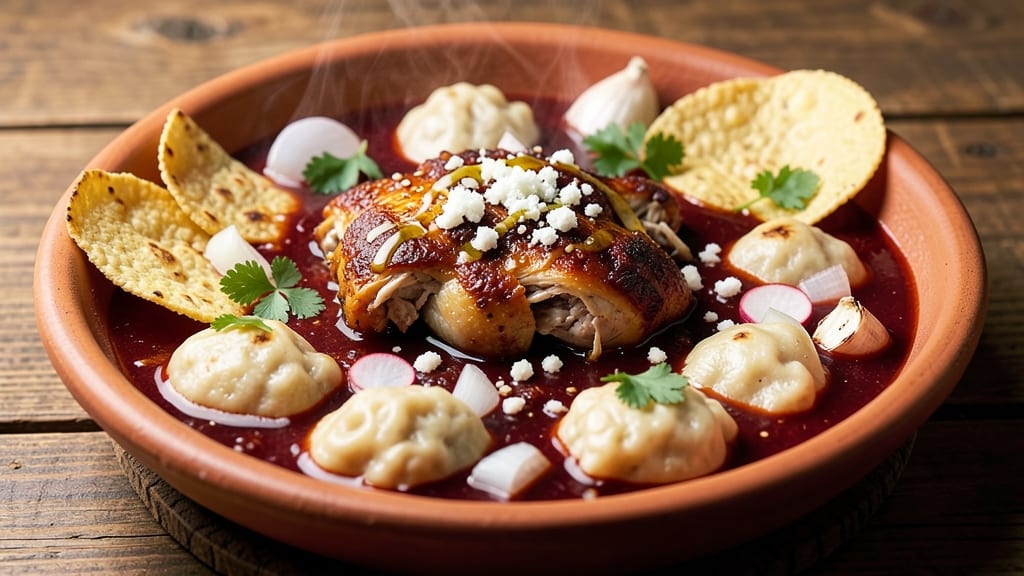
This authentic Mexican red chicken pozole recipe brings the soul of Mexican tradition to your kitchen with its deep, smoky chipotle broth and tender hominy. The secret lies in slow-cooked chilies and spices that infuse every bite with warmth, transforming simple ingredients into a dish that’s both comforting and celebratory.
I’ve perfected this version after years of experimenting—no shortcuts, just the real deal.
The heart of pozole is its rich, earthy broth, built from dried guajillo and ancho chilies that develop layers of flavor over hours of simmering. We’ll use masa harina to thicken it just right, creating a base that’s both hearty and velvety.
The chicken cooks until fall-apart tender, while hominy adds that signature chewy texture that makes pozole unforgettable. Every element—from the smoky spices to the fresh garnishes—works together to deliver a dish that tastes like home.
What sets this recipe apart is its authenticity: no processed ingredients, just whole spices, dried chilies, and fresh herbs like epazote (if available). The result is a bowl of pozole that’s vibrant, aromatic, and packed with the kind of depth you’d find in a Mexican abuela’s kitchen.
The toppings—crisp radishes, shredded cabbage, lime wedges, and avocado—add freshness and crunch, balancing the richness of the broth.
Perfect for gatherings or cozy weeknights, this pozole is a labor of love that rewards patience with every spoonful. Let’s bring the flavors of Mexico to your table—one smoky, spiced bite at a time.
Ingredients for authentic mexican red chicken pozole
Sixteen ingredients that transform into a dish bursting with smoky, spiced Mexican tradition.
| Ingredient | Amount | Notes |
|---|---|---|
| Chicken Thighs 🍗 | 3 lb | Bone-in, skin-on preferred |
| Dried Guajillo Chilies 🌶️ | 6 whole | Stems and seeds removed |
| Dried Ancho Chilies 🌶️ | 4 whole | Stems and seeds removed |
| Masa Harina 🌾 | ½ cup | For thickening broth |
| White Onion 🧅 | 1 whole | Quartered, skin on |
| Garlic Cloves 🧄 | 6 cloves | Peeled, smashed |
| Tomatillos 🍅 | 6 whole | Husked, quartered |
| Fresh Epazote 🌿 | ¼ cup | Chopped, optional but traditional |
| Chipotle Peppers in Adobo 🌶️ | 2 tbsp | Minced, plus 1 tbsp adobo sauce |
| Cumin Seeds 🌿 | 1 tbsp | Toasted lightly |
| Cans Hominy 🌽 | 4 cans | 15 oz each, drained |
| Bay Leaves 🍃 | 2 whole | Dried, for depth |
| Salt 🧂 | 1 ½ tsp | Adjust to taste |
| Black Peppercorns 🌶️ | ½ tsp | Crushed lightly |
| Lime Wedges 🍋 | 4 whole | For serving |
The chilies are non-negotiable for that authentic depth. Look for dried guajillo and ancho at Latin markets or the international aisle—La Costeña or Goya brands work well. Toast them lightly in a dry pan before soaking to deepen their flavor. The hominy? Bimbo brand is the gold standard, but any canned hominy will do. For the masa harina, Maseca is the go-to, but check the corn content—it should be 100% nixtamalized corn for that perfect texture. The chicken thighs? Bone-in, skin-on for maximum flavor, but boneless works in a pinch.
No fresh epazote? Substitute with a pinch of dried oregano plus a bay leaf—it won’t be identical, but it’ll get you close. Running low on tomatillos? Green tomatoes work too, but they’ll change the tang slightly. The chipotle peppers in adobo are a must for that smoky kick—Don Pedro or La Costeña are reliable brands. For the cumin, toast it in a dry skillet until fragrant (about 30 seconds) to wake up its flavor. If you can’t find fresh epazote, skip it entirely—the dish will still shine.
This broth tastes even better the next day, so make a double batch if you’re feeding a crowd. Store leftovers in the fridge for up to 5 days, or freeze for 3 months—portion it into containers with some broth to keep everything moist. The hominy and chicken reheat beautifully, but the garnishes (radishes, cabbage, avocado) are best added fresh when serving. For a shortcut, pre-chop your toppings and store them separately in the fridge for up to 3 days.
Why You'll Love This Recipe
- One-Pot Magic: I swear by this recipe—just toss the chicken, chiles, and onion into one pot, let the guajillo and ancho chilies steep their smoky goodness, and boom. No extra pans, no stress. The masa harina thickens it all into a rich, homestyle broth while you’re still chopping toppings.
- Deep, Smoky Soul: Between us, the combo of toasted dried chilies and masa harina creates a flavor that’s ridiculously complex—earthy, slightly sweet, with that perfect tang. The chicken thighs melt into the broth, so tender you’ll want to eat it with a spoon (and I do).
- Weeknight Crowd-Pleaser: This feeds six but costs less than takeout. My college roommates and I lived on it—cheap, filling, and always a hit. Serve it with radishes, lime, and tortillas, and suddenly you’re hosting a fiesta. (Yes, even on a Tuesday night.)
- Leftovers That Beg for More: The broth gets better the next day—more flavors meld, the masa thickens just right. I make a double batch on Sundays, freeze half, and still crave the other half. Honestly, I’ve reheated this pozole three times and it’s never disappointed. That’s the mark of a winner.
Step-by-step instructions for authentic Mexican red chicken pozole
Here's how to craft this traditional Mexican stew with rich, smoky flavors and tender hominy.
Prepare the Chicken and Dried Chilies
Begin by rinsing the 3 lb chicken thighs under cold water and patting them completely dry with paper towels. This step is crucial for achieving crispy skin and preventing the broth from turning cloudy. Place the chicken in a large pot and cover with cold water by about 2 inches. Bring to a boil over high heat for 5 minutes, then reduce to a simmer and cook uncovered for 45 minutes. This initial cooking helps tenderize the meat and extract initial flavors.
While the chicken simmers, prepare the dried chilies. Toast the 6 whole dried guajillo chilies and 4 whole dried ancho chilies in a dry skillet over medium heat for 1-2 minutes per side, until fragrant and slightly darkened. This step deepens their smoky flavor. Immediately transfer them to a bowl and cover with hot water from the kettle for 15 minutes to soften. The chilies will rehydrate completely and become pliable enough to blend.
Build the Smoky Broth Base
Remove the chicken from the pot and set aside to cool slightly. Strain the broth through a fine-mesh sieve into a clean pot, pressing on the solids to extract all the flavor. Return the broth to the stove and bring it back to a gentle simmer over medium heat. In a small skillet, toast the 1 tbsp cumin seeds for 1 minute until fragrant, then add the 2 whole bay leaves and 1 tbsp chipotle peppers in adobo (plus 1 tbsp adobo sauce) to the simmering broth. Let it steep for 10 minutes—this infuses the broth with deep, smoky complexity.
Drain the rehydrated chilies and transfer them to a blender with the 1 whole white onion (quartered), 6 cloves garlic (smashed), 6 whole tomatillos (husks removed and quartered), and 0.25 cup fresh epazote. Blend until completely smooth, scraping down the sides as needed. This vibrant green-red mixture forms the heart of pozole's signature flavor profile.
Thicken and Simmer the Pozole
Slowly pour the blended chili mixture into the simmering broth while whisking continuously to prevent curdling. Add the 0.5 cup masa harina and whisk vigorously for 2 minutes until the mixture thickens noticeably. This step creates the characteristic creamy texture that sets pozole apart. Stir in the 4 cans drained hominy and 1.5 tsp salt, then return the shredded chicken to the pot. Bring the pozole back to a gentle simmer and cook uncovered for 30 minutes, stirring occasionally.
Taste and adjust the seasoning with additional salt or 0.5 tsp black peppercorns as needed. The pozole should have a rich, slightly tangy depth with visible chunks of hominy and chicken. The broth should coat the back of a spoon but remain spoonable—this indicates proper thickening. If it's too thick, whisk in 1/4 cup hot water to reach the ideal consistency.
Finish and Serve Traditionally
Remove the bay leaves and adjust the heat to low to keep the pozole warm. The dish tastes best when served immediately, allowing the flavors to meld completely. Ladle the pozole into individual bowls and garnish each serving with lime wedges for a bright, citrusy contrast. Traditional toppings like shredded cabbage, radishes, and avocado slices can be served on the side for guests to customize their bowls.
For authentic presentation, serve the pozole in deep, wide bowls with a generous portion of hominy and chicken visible in each serving. The contrast of creamy hominy, tender chicken, and vibrant broth creates a visually stunning dish that's as impressive as it is delicious. Each bite should deliver layers of smoky, spicy, and slightly tangy flavors that define this Mexican classic.
Pro Tips For Making Authentic Mexican Red Chicken Pozole
- Toast Chilies Right: DESCRIPTION:
- Brown the Onion: DESCRIPTION:
- Simmer the Chicken Low: DESCRIPTION:
- Hydrate the Masa: DESCRIPTION:
Common mistakes when making great authentic mexican red chicken pozole
Skipping the Toast
I can’t stress this enough—toasting your dried chilies is non-negotiable for authentic flavor. Skipping this step means missing out on the deep, nutty aroma that develops when the chilies hit medium heat for just 1-2 minutes per side.
If you rush or skip it, your broth will taste flat and one-dimensional. Trust me, the extra 3 minutes of toasting time makes all the difference. 🌶️
Under-Soaking Chilies
If you soak your guajillo and ancho chilies for less than 15 minutes, they’ll be tough to blend and won’t soften enough to release their full flavor. I’ve seen people soak them for just 5 minutes—big mistake!
The chilies need time to rehydrate completely. Pro tip: Cover them with hot water (not boiling) to speed up the process while keeping them pliable for blending. 💫
Adding Masa Harina Too Fast
Dumping ½ cup masa harina all at once into the broth can create lumps that turn into a gluey mess. Instead, whisk it in gradually while the broth simmers over medium heat. If you add it too quickly, you’ll end up with a chunky, unappetizing texture.
I like to sprinkle it in while whisking vigorously for 2 minutes—this ensures a smooth, velvety consistency every time. ⚡
Overcooking the Chicken
Leaving the chicken in the broth for more than 45 minutes during the initial simmer can turn it dry and stringy. The goal is tender, fall-apart meat, not rubbery chunks.
Once the chicken reaches 165°F internal temperature, remove it immediately and let it rest. Overcooking is a common pitfall—don’t let it sit in the broth any longer than necessary. 🍗
Ignoring the Resting Phase
After simmering the pozole, resist the urge to serve it immediately. Letting it rest for 10-15 minutes off the heat allows the flavors to meld and the masa harina to fully integrate.
Skipping this step means a broth that’s still separating or lacks depth. Patience here is key—it’s worth the wait for that restaurant-quality taste. 💡
Skipping Epazote (or Substituting Poorly)
Epazote is the secret herb that gives pozole its distinctive anise-like aroma. If you skip it entirely or substitute with regular oregano, your dish will miss that signature flavor. No fresh epazote?
A pinch of dried oregano plus a bay leaf helps, but it won’t be the same. For the most authentic taste, track down fresh epazote at a Latin market—it’s worth the hunt! 🌿
Nutrition facts
Frequently asked questions
Why does authentic pozole use dried chilies instead of fresh?
Dried guajillo and ancho chilies develop a deeper, more complex flavor when toasted and simmered. Their earthy, slightly smoky notes create the signature depth that fresh chilies can't match. The long cooking process also removes their heat while preserving their vibrant color and rich aroma—key elements of traditional pozole.
Can I make pozole without masa harina?
While possible, masa harina is essential for authentic texture. For a substitute, try whisking 1/4 cup cornstarch into cold water first, then adding it to the simmering broth. The result won't be identical, but it'll create a slightly thicker consistency. For true authenticity, track down masa harina—it's worth the effort!
How spicy should red pozole be?
Authentic red pozole has a mild, earthy heat—not fiery. The guajillo and ancho chilies provide warmth without overwhelming spice. For extra depth, add 1-2 chipotle peppers in adobo (adjust to taste). The key is balance: the broth should taste rich and smoky, with just a hint of chili heat that lingers pleasantly.
What's the best way to reheat pozole?
Gently reheat pozole on the stove over low heat, stirring frequently to prevent lumps. Never microwave it directly—this can make the masa harina gummy. For best results, reheat only until warm, then finish with fresh lime juice and garnishes. Leftover pozole actually tastes better the next day as flavors meld!
Can I use pork or beef instead of chicken?
Traditional pozole uses chicken, but pork (especially pork shoulder) works beautifully for a heartier version. For beef, use 2-3 lbs chuck roast and extend cooking time to 2 hours for tender results. The broth will develop even deeper flavors, but chicken remains the most authentic choice for this classic recipe.