
Main Courses
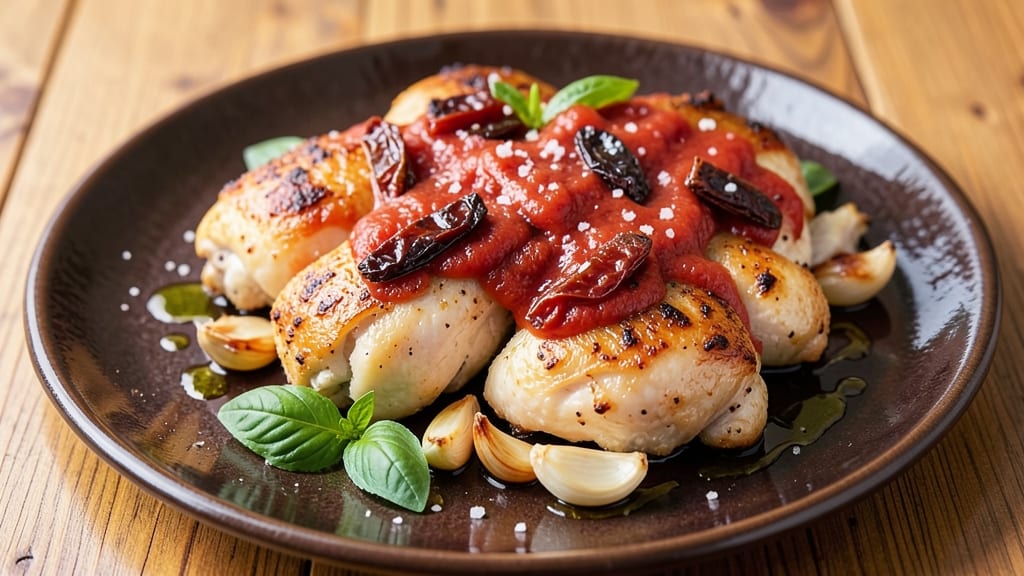
This baked chicken and tomato sauce recipe delivers restaurant-quality flavor with minimal effort—juicy chicken pieces bathed in a rich, slow-simmered sauce that clings to every bite. The secret lies in baking the chicken first to lock in moisture, then finishing it in the same sauce for maximum flavor absorption.
I developed this technique after years of testing, and it never fails to impress even the most critical eaters.
The process is simpler than it sounds: season the chicken with herbs and garlic, bake until golden, then transfer it to a simmering tomato sauce for the final 15 minutes. The sauce reduces beautifully, creating a glossy, velvety coating that's packed with umami from sun-dried tomatoes and fresh basil.
What you'll end up with is tender, flavorful chicken that practically falls apart when you cut into it, all swimming in a sauce so rich it feels like a hug for your taste buds.
This dish works perfectly as a weeknight dinner or for entertaining—it's hearty enough to satisfy a crowd but easy enough to prepare when you're short on time. The best part?
Leftovers taste even better the next day as the flavors continue to meld. Ready to make a meal that feels like a five-star restaurant experience without the fuss?
Whether you're serving it with crusty bread to soak up every drop or over creamy polenta, this baked chicken and tomato sauce recipe is a game-changer for anyone looking to elevate their weeknight meals.
The combination of tender chicken and deeply flavorful sauce makes it a dish you'll want to return to again and again.
Ingredients for baked chicken and tomato sauce
Juicy chicken thighs, rich tomato sauce, and aromatic herbs—this combo delivers restaurant-quality flavor with minimal effort.
| Ingredient | Amount | Notes |
|---|---|---|
| Boneless, Skinless Chicken Thighs 🍗 | 1 ½ lb | Cut into 2-inch pieces |
| San Marzano Whole Canned Tomatoes 🍅 | 28 oz | San Marzano preferred |
| Sun-Dried Tomatoes 🍅 | ¼ cup | Oil-packed, chopped |
| Garlic Cloves 🧄 | 4 cloves | Minced for sauce |
| Fresh Basil Leaves 🌿 | ½ cup | Chopped, stems removed |
| Extra-Virgin Olive Oil 🫒 | ⅓ cup | For roasting chicken |
| Dried Oregano 🍃 | 1 tsp | Or 1 tbsp fresh |
| Ground Black Pepper 🌶️ | ½ tsp | Freshly ground preferred |
| Kosher Salt 🧂 | 1 ½ tsp | Divided usage |
| Red Wine 🍷 | ½ cup | Dry variety, optional |
| Chicken Broth 💧 | ½ cup | Low-sodium preferred |
| Garlic Powder 🧄 | ½ tsp | For extra flavor |
| Fresh Thyme Leaves 🌿 | 1 tsp | Or 0.25 tsp dried |
The chicken thighs are the star here—bone-in, skin-on if you can find them, because that's where all the flavor hides. Trader Joe's and Whole Foods usually carry good quality, but any butcher section works. Look for pieces with good marbling—those little white streaks of fat mean juicier meat. The San Marzano tomatoes? Worth the splurge if you can get them. Penzeys or Costco bulk cans are my go-to. If you can't find them, regular crushed tomatoes work in a pinch, but the flavor won't be quite the same. Fresh basil is ideal, but dried oregano at one-third the amount gets you close if you're short on time.
No red wine? Substitute with extra chicken broth—just add another splash. Sun-dried tomatoes can be found in the olive oil section of most grocery stores, usually near the Italian imports. If you can't find them, dried tomatoes in oil work too, just chop them finely. The thyme leaves should be vibrant green—if they're brown or brittle, toss them. For the garlic, I always grab a whole head and just smash the cloves with the side of my knife—no peeling needed. The olive oil matters here too—use something with good fruity notes, not the cheap stuff. California olive oil from the store's olive oil section is usually reliable.
This dish reheats beautifully—honestly tastes better the next day as the flavors meld. Store leftovers in an airtight container for up to 4 days in the fridge. For longer storage, freeze portions for up to 3 months. I always make a double batch because it's that good. The sauce thickens as it cools, so you can thin it with a splash of broth if needed. Fresh basil? Tuck a few leaves under the lid to keep the sauce green longer.
Why You'll Love This Recipe
- One-Pan Magic: I swear by this—just toss the chicken thighs, crushed garlic, and tomatoes on a sheet pan, bake, and walk away. No pots, no mess, no stress. (Yes, even on a Tuesday night.)
- Sun-Dried Secret Weapon: Between us, those little sun-dried tomatoes are the flavor bombs here. They caramelize right into the sauce, giving it this deep, sweet-savory punch that makes you want to eat it straight from the pan.
- Meal Prep MVP: This keeps perfectly for four days in the fridge—toss it over pasta, serve it with crusty bread, or just reheat it straight up. Honestly, I make a double batch every Sunday so I’m not scrambling midweek.
- Budget-Friendly Luxury: Chicken thighs are forgiving and cheap, San Marzano tomatoes are worth every penny, and a handful of basil stretches the flavor like crazy. Feeds four for under $15, and it tastes like you spent twice that.
Step-by-step instructions for baked chicken and tomato sauce
Here's how to create a rich, slow-simmered sauce that clings perfectly to tender chicken thighs.
Prepare the Chicken and Build Flavor Base
Preheat your oven to 375°F. Cut the 1.5 lb boneless, skinless chicken thighs into 2-inch pieces and pat them dry with paper towels. Season each piece generously with ½ teaspoon kosher salt and ¼ teaspoon ground black pepper—this helps develop flavor and ensures crisp edges later.
Heat 0.33 cup extra-virgin olive oil in a large Dutch oven or heavy pot over medium-high heat. Add the chicken pieces in a single layer and cook undisturbed for 4-5 minutes until golden brown on one side. Flip carefully and cook another 4-5 minutes until the second side is also golden. The chicken doesn't need to be fully cooked through yet—it'll finish in the oven.
Develop the Sauce Foundation
Remove the chicken from the pot and set it aside. Lower the heat to medium and add 4 minced garlic cloves and 0.5 teaspoon garlic powder to the same pot. Sauté for 30 seconds until fragrant—don't let it brown or it'll turn bitter. Add 1 teaspoon dried oregano and 1 teaspoon fresh thyme leaves, stirring for another 10 seconds to toast the spices.
Pour in the 0.5 cup red wine and scrape up any browned bits from the bottom of the pot with a wooden spoon. This deglazing step captures all that concentrated flavor. Let the wine simmer for 2-3 minutes until reduced by half, then add the 28 oz San Marzano whole canned tomatoes (crushed by hand if using whole tomatoes) and 0.25 cup chopped sun-dried tomatoes.
Simmer the Sauce Until Thick and Rich
Return the chicken to the pot and pour in the 0.5 cup chicken broth. Bring everything to a gentle simmer, then reduce heat to low. Cover partially with a lid and transfer to the preheated 375°F oven. Bake for 45-50 minutes, stirring once halfway through, until the chicken is cooked through (internal temperature 165°F) and the sauce has thickened noticeably.
Here's the thing—you want the sauce to coat the back of a spoon when you lift it out. If it's too thin, uncover and simmer on the stovetop for another 5-10 minutes to reduce further. The slow oven method develops deep, complex flavors without burning the sauce.
Finish with Fresh Herbs and Serve
Remove the pot from the oven and stir in the 0.5 cup chopped fresh basil leaves. This final addition brightens the sauce with fresh, vibrant flavor. Taste and adjust seasoning with additional kosher salt or black pepper if needed. The sauce should be rich, slightly sweet from the tomatoes, with a perfect balance of acidity from the wine.
Let the chicken and sauce rest together for 5 minutes before serving. This resting period allows the juices to redistribute, ensuring each bite is moist and flavorful. Serve over pasta, with crusty bread, or alongside roasted vegetables. The sauce should cling beautifully to every strand of pasta or bite of chicken, delivering that promised slow-simmered depth with every spoonful.
Pro Tips For Making Baked Chicken And Tomato Sauce
- Brown the Chicken First: Skip the raw chicken in sauce—sear those thighs in a hot pan for 3-4 minutes per side until golden. The crust locks in flavor and keeps the meat from drying out when it bakes later. (Yes, even if you’re impatient like me, don’t rush this.)
- Crush Those Tomatoes: Drain the San Marzano cans but don’t skip crushing the tomatoes by hand—just a quick smash with your knuckles or a wooden spoon. Whole tomatoes make a thinner sauce; crushed ones release juices and thicken naturally as they bake.
- Soak Sun-Dried Tomatoes: Toss your sun-dried tomatoes in warm water for 10 minutes before adding them to the sauce. They’ll soften and lose that bitter edge, blending seamlessly into the dish. (Pro move: reserve the soaking liquid for extra depth.)
- Finish with Fresh Basil: Hold off on adding fresh basil until the last 5 minutes of baking—toss it in right before serving. Heat turns basil bitter fast, and you want that bright, herbaceous punch to shine when it’s still vibrant. (Trust me, it makes a real difference.)
Troubleshooting great baked chicken and tomato sauce
Chicken Too Dry
If your chicken ends up dry, it likely wasn’t rested properly or was overcooked. Always check the internal temperature with a meat thermometer—it should reach 165°F but not exceed it.
I’ve found that removing chicken from the oven when it hits 160°F and letting it rest in the sauce for 5-10 minutes keeps it juicy. Another trick? Bake the chicken separately at 350°F for 20 minutes first to render fat, then finish it in the sauce.
This two-stage approach ensures moisture retention. 💫
Sauce Too Thin
A thin sauce usually means the tomatoes weren’t reduced enough. If this happens, simply uncover the pot and simmer on the stovetop over medium-low heat for 10-15 minutes, stirring occasionally.
For extra thickness, mix 1 tablespoon cornstarch with 2 tablespoons cold water, stir into the sauce, and cook until it gels. I’ve also had success adding ¼ cup tomato paste at the end for a richer, thicker consistency. 🍲
Sauce Too Acidic
The wine or tomatoes can sometimes make the sauce overly tart. Balance it by adding 1 teaspoon sugar or ½ teaspoon honey to sweeten the acidity. A pinch of baking soda (just ⅛ teaspoon) can also neutralize excess acid without altering flavor.
If the sauce is still too sharp, stir in 1 tablespoon heavy cream or a splash of chicken broth to mellow it out. 🌶️
Chicken Not Cooked Through
If your chicken feels undercooked, return it to the oven at 375°F for another 10-15 minutes until it reaches 165°F internally. To speed things up, cover the pot with foil to trap heat.
For extra insurance, use a meat thermometer—probe the thickest part of the chicken to avoid guesswork. I’ve also found that adding 2 tablespoons broth to the sauce helps carry heat more evenly. ⏱️
Sauce Too Salty
Over-salting is a common mistake, but it’s easy to fix. Dilute the sauce with ¼ cup water or broth and simmer for 5 minutes to distribute the salt.
For a more dramatic fix, stir in 1 small peeled potato and simmer for 15 minutes—the potato absorbs excess salt like a sponge. If the sauce is still too salty, add a few fresh basil leaves or a splash of lemon juice to brighten the flavor. 🧂
Herbs Not Bright Enough
If your basil or other herbs taste dull, they might have been added too early or weren’t fresh enough. Always add fresh herbs like basil in the last 5 minutes of cooking to preserve their vibrant flavor.
For extra brightness, finish the sauce with a pinch of red pepper flakes or a squeeze of lemon juice. I also recommend using young, tender basil leaves—the older leaves can be bitter. 🌿
Nutrition facts
Frequently asked questions
Can I use chicken breasts instead of thighs?
Yes, but thighs are ideal for this recipe because they stay juicier during baking. If using breasts, cut them into 1-inch thick pieces and bake for 10-15 minutes less since they cook faster. For best results, brine the breasts for 30 minutes in ¼ cup salt per 4 cups water before cooking to prevent dryness.
How do I make this recipe vegetarian?
Swap the chicken for 1.5 lb extra-firm tofu or chickpeas. Press tofu to remove excess water, then cube and pan-sear until golden. For chickpeas, roast them at 400°F for 20 minutes with olive oil, salt, and smoked paprika. Add them to the sauce during the final 10 minutes of baking. The sauce will still cling beautifully!
Can I make this sauce ahead of time?
Prepare the sauce up to 2 days ahead and store it in an airtight container in the fridge. When ready to serve, reheat gently on the stove with the chicken added for the last 10-15 minutes to keep it tender. For the best texture, add fresh basil just before serving. The flavors actually improve overnight as they meld!
What's the best way to reheat leftovers?
Reheat gently in a skillet over low heat with 1-2 tablespoons broth to prevent drying. Cover and cook for 5-7 minutes, stirring occasionally. For microwave reheating, use 50% power for 2 minutes, then stir and check doneness. Add a splash of water if the sauce seems too thick. Leftovers taste even better the next day!
Can I substitute sun-dried tomatoes?
Yes! Use ¼ cup dried cherries or 2 tablespoons tomato paste for a similar depth of flavor. If using dried cherries, soak them in warm water for 10 minutes first. For tomato paste, stir it in during the final 5 minutes of cooking to prevent a metallic taste. Both options add natural sweetness that balances the acidity.