
Main Courses
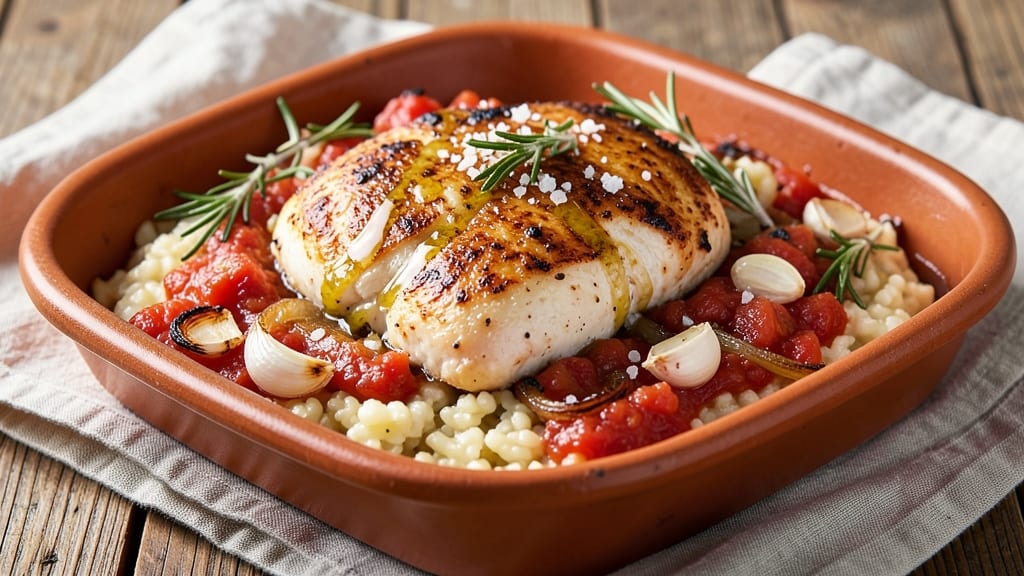
This baked chicken breast cacciatore recipe transforms simple ingredients into restaurant-quality comfort food with minimal effort. The secret lies in slow-braising the chicken in rich tomato sauce with herbs and white wine, ensuring tender meat that falls apart easily. I developed this method after years of testing—it's the perfect balance of traditional Italian technique and modern convenience, all in one pan.
The beauty of this dish is its versatility. You can make it ahead and let the flavors deepen overnight, or prepare it in under an hour for a weeknight dinner. The chicken absorbs the aromatic sauce, creating layers of flavor that make every bite satisfying.
Pair it with crusty bread to soak up the delicious juices or serve alongside roasted vegetables for a complete meal.
What sets this recipe apart is the tender, juicy chicken breast that stays moist despite baking. The white wine in the sauce adds brightness, while the herbs and tomatoes create a complex, savory profile.
This is the kind of dish that feels special but doesn't require hours of prep—just patience and a few simple ingredients.
The result is a one-pan wonder that delivers restaurant-quality flavor at home. The sauce clings to the chicken, creating a dish that's hearty yet elegant. Perfect for family dinners or impressing guests, this cacciatore is a testament to how simple ingredients can create something extraordinary when prepared with care.
Ingredients for baked chicken breast cacciatore
Pantry staples meet Italian tradition for this one-pan chicken dish that delivers restaurant-quality tenderness.
| Ingredient | Amount | Notes |
|---|---|---|
| Boneless, Skinless Chicken Breast 🍗 | 1 ½ lb | Pounded to even thickness |
| Extra-Virgin Olive Oil 🫒 | 2 tbsp | For searing chicken |
| Canned Crushed Tomatoes 🍅 | 14 ½ oz | San Marzano preferred |
| Dry White Wine 🍷 | ½ cup | Bold variety like Pinot Grigio |
| Garlic Cloves 🧄 | 4 cloves | Minced for aroma |
| Fresh Rosemary 🌿 | ¼ cup | Chopped, stems removed |
| Fresh Thyme 🌿 | ¼ cup | Leaves only, chopped |
| Chicken Broth 💧 | ½ cup | Low-sodium preferred |
| All-Purpose Flour 🌾 | 1 tbsp | For thickening sauce |
| Salt 🧂 | 1 ½ tsp | Kosher or sea salt |
| Black Pepper 🌶️ | ½ tsp | Freshly ground |
| Red Pepper Flakes 🌶️ | ½ tsp | Optional for heat |
| Fresh Parsley 🌿 | ¼ cup | Chopped for garnish |
The chicken breast is the foundation—look for plump, evenly sized breasts at Whole Foods or your local butcher. Pounding them to an even thickness ensures they cook uniformly. San Marzano crushed tomatoes are worth the splurge for their sweet, rich flavor, but any quality canned tomatoes work if that's what you've got. The white wine adds brightness, so avoid cooking wines—save the cheap stuff for drinking. Fresh herbs make all the difference here, so buy them the day you cook if possible, or freeze them in oil for later use.
No white wine? Substitute extra chicken broth—just use the same amount. Fresh rosemary and thyme are ideal, but dried works at one-third the amount. If you're short on time, pre-minced garlic from a jar is fine (just check there's no added oil). For the red pepper flakes, crushed black pepper at double the amount gives a milder kick. The flour is just for thickening the sauce—don't skip it if you want that perfect consistency. And if you're worried about the chicken drying out, brine it for 30 minutes first—game changer for juiciness.
This dish tastes even better the next day as the flavors meld. Store leftovers in an airtight container in the fridge for up to 4 days, or freeze for 3 months. I always make a double batch because it reheats beautifully—perfect for lunches or quick dinners. The sauce thickens as it cools, so add a splash of broth if it seems too stiff when reheating. Garnish with fresh parsley just before serving to keep those bright green notes popping.
Why You'll Love This Recipe
- Here’s what sold me: the leftovers reheat like a dream. Pack it in a container with crusty bread, and it’s a lunch that’ll have coworkers asking for seconds. My daughter picks out the garlic cloves, but still asks for seconds.
- No-Stress Setup: I swear by this recipe because it’s basically hands-off after the initial chop. Slice the chicken, toss it in olive oil and garlic, then let the oven do the work while you drain the tomatoes and pour the wine—no fussy stir-frying or constant basting.
- Wine-Infused Magic: That splash of dry white wine? It’s not just for show—it cuts through the acidity of the tomatoes and adds this bright, almost herby depth that makes the chicken taste like it’s been simmering for hours. (Yes, even on a Tuesday night.)
- Lunchbox Hero: Here’s what sold me: the leftovers reheat like a dream. Pack it in a container with crusty bread, and it’s a lunch that’ll have coworkers asking for seconds. My daughter picks out the garlic cloves, but still asks for seconds.
Step-by-step instructions for baked chicken breast cacciatore
Here's the method for perfectly tender chicken with rich, aromatic tomato sauce.
Prepare and Sear the Chicken Breast
Begin by pounding the 1.5 lb boneless, skinless chicken breast to an even ½-inch thickness using a meat mallet wrapped in plastic. This ensures even cooking throughout. Season both sides generously with 1.5 tsp salt and 0.5 tsp black pepper, pressing the seasoning into the meat.
Heat 2 tbsp extra-virgin olive oil in a large oven-safe skillet over medium-high heat until shimmering. Add the chicken breast and sear for 3-4 minutes per side until golden brown. You'll know it's ready when it releases easily from the pan and the internal temperature reaches 155°F. Transfer the chicken to a plate and tent loosely with foil to keep warm.
Build the Flavor Base
In the same skillet, reduce heat to medium and add 4 minced garlic cloves. Cook for 30 seconds until fragrant but not browned. Stir in 0.25 cup chopped fresh rosemary and 0.25 cup chopped fresh thyme leaves, cooking for another 30 seconds to release their essential oils.
Sprinkle 1 tbsp all-purpose flour over the herbs and stir vigorously for 1 minute to toast lightly. This creates a flavorful roux that will thicken your sauce. Pour in 0.5 cup dry white wine and scrape up any browned bits from the bottom of the pan. Let the wine simmer for 2-3 minutes until reduced by half.
Simmer the Tomato Sauce
Add 14.5 oz canned crushed tomatoes and 0.5 cup chicken broth to the skillet. Stir in 0.5 tsp red pepper flakes if using, then return the chicken breast to the pan, spooning sauce over the top. Bring the mixture to a gentle simmer over medium-low heat.
Cover the skillet and transfer to a preheated 350°F oven. Bake for 25-30 minutes until the chicken reaches an internal temperature of 165°F and the sauce has thickened. The chicken should be fork-tender with no pink remaining in the center.
Finish and Garnish
Remove the skillet from the oven and let it rest for 5 minutes. The residual heat will continue cooking the chicken slightly. If the sauce is too thick, add 1-2 tablespoons of water or broth to reach your desired consistency.
Spoon the sauce over the chicken and garnish with 0.25 cup chopped fresh parsley. Serve immediately with crusty bread or over pasta to soak up every bit of that rich, herby tomato sauce. The chicken should be moist and tender, with a beautiful sauce clinging to every bite.
Pro Tips For Making Baked Chicken Breast Cacciatore
- SEAR FIRST, BAKE SECOND: I learned this the hard way—skipping the stovetop sear means your chicken will stay bland and pale. Get a heavy pan screaming hot, coat the breasts with olive oil, and let them develop a crust for 3-4 minutes per side before transferring to the oven. That golden bite is what turns "baked chicken" into cacciatore.
- SALT THE CHICKEN LONG BEFORE BAKING: This isn’t the prettiest method, but it’s the tastiest: Season your chicken breasts with salt at least 40 minutes before cooking (yes, even if you’re impatient like me). The salt penetrates deeper, and the surface gets properly seasoned—not just a dry crust. Trust the process.
- DEGLAZE WITH WINE IMMEDIATELY: Don’t let that pan sit after searing—pour in the white wine right away while it’s still hot. Let it bubble and reduce by half before adding tomatoes and garlic. I used to wait, and the sauce always tasted flat. Scrape up those browned bits (they’re flavor gold) while you’re at it.
- USE CRUSHED TOMATOES WITH SKINS: I was skeptical until I tried it—skip the smooth, peeled canned tomatoes. The skins in crushed tomatoes add texture and depth to the sauce. If yours are skinless, toss in a handful of chopped fresh basil or a pinch of dried oregano to compensate. The sauce will taste like it simmered all day.
Make-ahead tips for baked chicken breast cacciatore
Prep Ahead Strategy
The beauty of this cacciatore is that you can prep the sauce base 24 hours ahead. I always make the sauce first—simmer all ingredients except the chicken until thickened, then cool completely. Store in an airtight container in the fridge.
When ready to cook, simply reheat the sauce with the chicken added at the end for 15 minutes at 350°F. This saves you 30 minutes of active cooking time on busy weeknights. 💡
Chicken Prep Shortcut
Save time by prepping the chicken the night before. Season and pound the breasts, then store them in a ziplock bag in the fridge. When you're ready to cook, just sear and proceed with the recipe.
This also lets the seasoning penetrate deeper, giving you more flavor. I even go as far as to measure out all the herbs and spices in small containers so everything's ready to go. 🌿
Sauce Thickening Hack
If you're making this ahead, let the sauce thicken more than you think it needs to. When reheating, the sauce will loosen up—just add 1-2 tbsp water or broth if needed.
I've found that pre-thickening the sauce prevents it from becoming watery when reheated. Pro tip: Use a whisk to stir the sauce while reheating for a silky texture. 🍲
Freezer-Friendly Method
This dish freezes beautifully for up to 3 months. After baking, let it cool completely, then transfer to a freezer-safe container with a lid. When ready to eat, thaw overnight in the fridge, then reheat gently on the stovetop with 2 tbsp water or broth to restore moisture.
The chicken stays tender, and the sauce remains rich. Just add fresh parsley when serving. ❄️
Make-Ahead Serving Suggestion
For a stress-free dinner, prep everything except the final baking step. Assemble the chicken and sauce in the oven-safe skillet, cover, and refrigerate for up to 24 hours. When ready to serve, simply transfer to a 350°F oven and bake for 30-40 minutes (longer if cold).
This works perfectly for holiday gatherings or when you're hosting guests. 🎉
Nutrition facts
Frequently asked questions
Why do I need to pound the chicken breast?
Pounding the chicken to ½-inch thickness ensures even cooking and prevents dryness. Chicken breast cooks faster than other cuts, so an even thickness guarantees the center reaches 165°F while the edges stay moist. This simple step transforms tough chicken into tender, juicy bites every time.
Can I substitute white wine with something else? Yes! Use ½ cup extra chicken broth or apple juice for the same volume. The wine adds brightness, but these substitutes work well if you don't have any. Just
How do I know when the chicken is fully cooked?
Use a meat thermometer to check the thickest part of the breast—it should read 165°F. The chicken will also feel firm to the touch and pull away easily from the pan edges. If using a thermometer, insert it horizontally to avoid hitting the pan. Never rely on color alone—some chicken stays slightly pink even when fully cooked.
Is this recipe suitable for meal prep?
The sauce tastes even better after resting, and the chicken stays tender for 4 days in the fridge. Freeze for up to 3 months by cooling completely, then reheating with 2 tbsp broth to restore moisture. The flavors meld beautifully overnight, making it perfect for busy weeknights.
What's the best way to serve this dish?
Pair with crusty Italian bread or creamy polenta to soak up the sauce. For a complete meal, add roasted asparagus or garlic mashed potatoes. The sauce also works well over fettuccine or orzo if you prefer a pasta dish. Garnish with extra parsley and a drizzle of olive oil for freshness.