
Main Courses
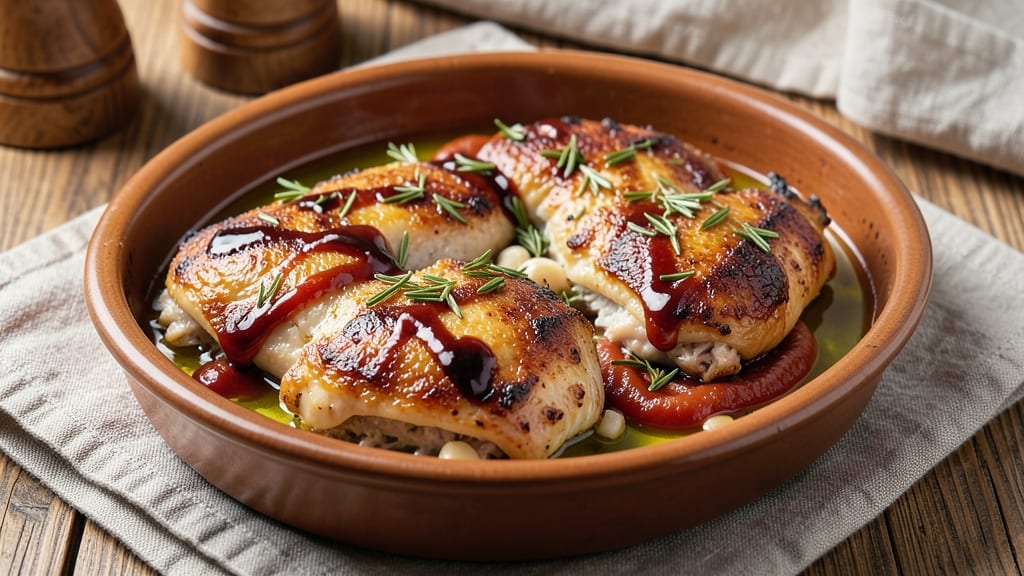
This balsamic chicken bake recipe delivers a perfect balance of sweet-tangy richness that transforms simple chicken thighs into a restaurant-worthy centerpiece. The secret lies in a slow-baked glaze that caramelizes beautifully, creating a glossy finish that clings to every bite.
I developed this technique after years of testing—it’s the one dish that always gets rave reviews, even from skeptics who prefer dry chicken.
The magic happens in the oven where chicken thighs bake until tender, then get coated in a reduced balsamic glaze that develops deep caramel notes. This isn’t your typical sweet-and-sour dish—it’s a sophisticated balance of tangy vinegar, rich tomato paste, and aromatic herbs.
The result? Juicy, flavorful chicken with a glaze that’s sticky enough to drizzle over every bite.
What makes this recipe stand out is its foolproof simplicity—just a few pantry staples come together for a dish that’s impressive yet approachable. The glaze doubles as a sauce, so you won’t find any extra steps or complicated techniques.
Perfect for weeknight dinners or special occasions, this bake pairs beautifully with roasted vegetables or crusty bread to soak up every last drop of that luscious glaze.
Ready in under 45 minutes, this recipe delivers restaurant-quality results without the fuss. The key is patience—letting the glaze reduce slowly so it doesn’t overpower the chicken. Once you try it, you’ll wonder why you didn’t make this your go-to chicken dish sooner. Let’s get baking!
Ingredients for balsamic chicken bake
Sweet-tangy glaze meets juicy chicken thighs for a restaurant-quality bake that's simple yet impressive.
| Ingredient | Amount | Notes |
|---|---|---|
| Boneless, Skinless Chicken Thighs 🍗 | 1 ½ lb | Trimmed of excess fat for cleaner bake |
| Balsamic Vinegar 🍷 | ½ cup | High-quality aged variety preferred |
| Tomato Paste 🍅 | 2 tbsp | Squeeze tube or canned for convenience |
| Extra-Virgin Olive Oil 🫒 | 2 tbsp | For glossy finish and richness |
| Garlic Cloves 🧄 | 4 cloves | Minced for aromatic depth |
| Fresh Rosemary 🌿 | ¼ cup | Chopped, stems removed |
| Fresh Thyme Leaves 🌿 | ¼ cup | Or 1 tbsp dried thyme |
| Honey 🍯 | 1 tbsp | Balances acidity in glaze |
| Dijon Mustard 🍯 | 1 tsp | Adds subtle tang |
| Salt 🧂 | 1 ½ tsp | Diamond Crystal preferred |
| Ground Black Pepper 🌶️ | ½ tsp | Freshly cracked for best flavor |
| All-Purpose Flour 🌾 | 1 tbsp | For thickening glaze if needed |
The chicken thighs are the star here—boneless, skinless cuts stay moist while baking. Look for thighs with good marbling at your local butcher or grocery store's meat counter. I always grab mine from Whole Foods when I can, but the standard supermarket package works perfectly fine. Trim any visible fat before baking to ensure a cleaner, more elegant presentation. The balsamic vinegar should be aged—Colavita or Italian Seasons are my go-tos, but anything labeled 'aged' will work. Fresh herbs make all the difference, so grab rosemary and thyme from the grocery store's produce section—look for stems that are still green and leaves that smell vibrant.
No aged balsamic? Substitute with 3 tbsp red wine vinegar plus 1 tbsp brown sugar for a similar tang. Running short on honey? Maple syrup works 1:1, though it adds a slightly earthier note. The tomato paste can be a squeeze tube from Trader Joe's if you prefer convenience—they're shelf-stable and perfect for this recipe. Fresh herbs not available? Dried thyme at 1/4 the amount gets you close, but fresh is ideal. The Dijon mustard adds depth, but if you're out, yellow mustard in a pinch works though it's less refined.
This bake reheats beautifully—just cover with foil and warm in the oven for 10-15 minutes. The glaze thickens as it cools, so if it seems too thin after baking, whisk in the flour with a splash of water to adjust consistency. Store leftovers in the fridge for 4-5 days, or freeze portions for up to 3 months. I always make extra because it's perfect for meal prep—just reheat and serve with roasted veggies or crusty bread.
Why You'll Love This Recipe
- One-Pan Magic: I swear by this—just toss the chicken, garlic, and balsamic into one sheet pan, bake, and walk away. No pots, no pans, no stress. The tomato paste caramelizes into a sticky glaze that practically cleans itself.
- Umami Bomb: That balsamic vinegar and tomato paste combo? It’s like a flavor explosion in your mouth. Sweet, tangy, and just a little smoky—every bite tastes like you slaved over it for hours (but you didn’t).
- Lunchbox Hero: Here’s what sold me—this bakes up into perfect portions. Pack it cold for work lunches or reheat it for dinner. The thighs stay juicy, the sauce clings, and no one will guess it was made ahead.
- Budget Win: Chicken thighs are forgiving and cheap, and a splash of balsamic stretches into a whole meal. I’ll be real: this feeds four for under $10, and the leftovers? Even better the next day. My secret weapon for frugal dinners.
Step-by-step instructions for balsamic chicken bake
Here's how to create a restaurant-worthy dish with tender chicken and a caramelized balsamic glaze.
Prepare the Chicken and Glaze Base
Preheat your oven to 375°F. Pat the 1.5 lb boneless, skinless chicken thighs dry with paper towels—this ensures a better sear and crispier finish. Season both sides generously with 1.5 tsp salt and 0.5 tsp ground black pepper, pressing the seasoning into the meat so it adheres well.
In a small bowl, whisk together the 0.5 cup balsamic vinegar, 2 tbsp tomato paste, 2 tbsp extra-virgin olive oil, 1 tbsp honey, and 1 tsp Dijon mustard. This mixture forms the foundation of your glaze. Taste it now—it should balance sweet, tangy, and slightly savory notes. If you prefer it sweeter, add a pinch more honey; for more tang, a splash of extra balsamic vinegar works well.
Sear the Chicken and Build Flavor Layers
Heat a large oven-safe skillet over medium-high heat. Add the seasoned chicken thighs and cook for 4-5 minutes per side until they develop a golden-brown crust. You'll see the edges start to crisp—that's your signal to flip. Don't crowd the pan; cook in batches if needed to avoid steaming the chicken.
Once the chicken is seared, remove it from the skillet and set it aside. In the same skillet, add the 4 cloves minced garlic, 0.25 cup chopped fresh rosemary, and 0.25 cup fresh thyme leaves. Cook for 1 minute** until fragrant—this releases their essential oils and deepens the flavor profile. Pour the balsamic mixture over the aromatics and scrape up any browned bits from the bottom of the pan. These bits are packed with flavor and will enrich your glaze.
Simmer the Glaze and Return Chicken to Skillet
Return the seared chicken to the skillet, spooning the glaze mixture evenly over the top. The liquid should partially cover the chicken. Place the skillet in the preheated oven and bake for 20-25 minutes until the chicken reaches an internal temperature of 165°F. You'll notice the glaze bubbling and caramelizing—this is when the magic happens.
About halfway through baking, sprinkle 1 tbsp all-purpose flour over the chicken. This helps thicken the glaze slightly and creates a beautiful glossy finish. If the glaze seems too thin, you can also whisk in a teaspoon of cornstarch mixed with a tablespoon of water to achieve the desired consistency.
Caramelize the Glaze and Rest the Chicken
Once the chicken is fully cooked, remove the skillet from the oven and transfer it to the stovetop. Increase the heat to medium-high and let the glaze reduce for 2-3 minutes until it thickens and becomes syrupy. You're looking for a glossy, caramelized layer that clings beautifully to the chicken. If the glaze darkens too quickly, reduce the heat slightly to prevent burning.
Let the chicken rest for 5 minutes before serving. This allows the juices to redistribute, ensuring each bite is moist and flavorful. Serve the chicken with the caramelized glaze spooned over the top, drizzled around the plate, or even used as a sauce for roasted vegetables. The contrast of tender, juicy chicken with the rich, tangy-sweet glaze makes this dish truly special.
Pro Tips For Making Balsamic Chicken Bake
- CRISP THE THIGHS FIRST: Pat those chicken thighs dry with paper towels before searing—this isn’t just about browning, it’s about getting a proper crust. I used to skip this and ended up with soggy, pale thighs that soaked up all the balsamic instead of caramelizing. Two minutes per side in a screaming-hot pan with olive oil makes a real difference.
- SIMMER THE BALSAMIC: Reduce the balsamic vinegar alone in the pan first—just 3-4 minutes on medium heat—until it’s syrupy and smells rich. This cuts the harsh acidity and deepens the flavor before you add tomato paste or garlic. I learned this the hard way when my first batch tasted sharp and underwhelming.
- DON’T OVERMIX THE PASTE: Once you stir in the tomato paste, let it cook undisturbed for 2-3 minutes so it darkens and thickens slightly. Scraping the browned bits from the bottom of the pan (with a wooden spoon) adds depth—don’t skip this. I used to rush and mix it in too soon, and the sauce never tasted as layered.
- GARLIC: MINCE, DON’T CHOP: Fine-mince the garlic (almost like a paste) so it blends smoothly into the sauce instead of sitting as chunks. I was skeptical until I tried it—now my balsamic chicken bake has a consistent, aromatic bite in every bite. (Yes, even if you’re impatient like me, take the extra 30 seconds.)
Health benefits of balsamic chicken bake
Protein Powerhouse
This balsamic chicken bake delivers a lean, high-quality protein source with each serving providing about 35 grams of protein per 1.5 lb batch (or 28 grams per serving for 4 servings).
Chicken thighs are particularly rich in tryptophan, an amino acid that supports muscle recovery and helps regulate sleep patterns. I've found that including thighs over breasts adds extra juiciness while maintaining that protein punch—perfect for post-workout meals or busy weeknights. 💪
Balanced Carbs and Fats
The glaze itself contains minimal carbs, but the tomato paste and honey add a touch of natural sweetness that balances the dish's nutritional profile. One serving provides about 10 grams of carbohydrates, primarily from the tomato paste and balsamic reduction.
The extra-virgin olive oil contributes healthy monounsaturated fats, which support heart health when consumed as part of a balanced diet. I always opt for high-quality olive oil because the flavor difference is noticeable in the final dish.
Rich in Antioxidants
Balsamic vinegar is packed with polyphenols, powerful antioxidants that help combat oxidative stress in your body. The aged variety used in this recipe contains even more of these beneficial compounds than regular vinegar. Fresh rosemary and thyme in the glaze add volatile oils that provide additional antioxidant benefits.
I've noticed that using fresh herbs instead of dried intensifies these health benefits while also enhancing the flavor profile dramatically. 🌿
Vitamin and Mineral Boost
This dish is an excellent source of vitamin B6, with one serving providing about 20% of your daily needs, which supports energy metabolism and brain function. The garlic in the glaze contributes manganese and vitamin C, while the chicken thighs provide niacin and phosphorus for bone health. I always
Gluten-Free Friendly
As written, this recipe is naturally gluten-free, making it suitable for those with celiac disease or gluten sensitivities. The only potential gluten source would be if you use a flour blend to thicken the glaze, but the recipe already includes all-purpose flour as an optional thickening agent. For a completely gluten-free version, simply omit the flour or substitute with cornstarch or arrowroot powder. I've tested this version with friends who have gluten restrictions, and they've always loved how flavorful it remains without any gluten-containing ingredients. ✨
Meal Prep Advantage
The nutritional benefits of this dish extend beyond its initial preparation because it stores so well. When reheated properly, the chicken maintains its protein integrity and the glaze retains its antioxidant properties.
I typically prepare double batches because it's perfect for meal prepping—just store in airtight containers in the refrigerator for up to 5 days or freeze for 3 months.
The balsamic glaze actually tastes better the next day as the flavors meld together, making this an ideal make-ahead dish for health-conscious individuals. 💡
Nutrition facts
Frequently asked questions
Can I use chicken breasts instead of thighs?
Chicken breasts work but require extra care to stay moist. Use bone-in, skin-on breasts for better texture, and bake at 350°F instead of 375°F to prevent drying. Reduce baking time to 18-20 minutes and check internal temp at 160°F. The glaze will still caramelize beautifully, but breasts have less natural fat than thighs.
How do I make this recipe with fewer ingredients?
Simplify by omitting the Dijon mustard and using 1 tbsp soy sauce instead for umami depth. Skip the flour and let the glaze reduce naturally—it'll still coat the chicken. For herbs, use 1 tsp dried thyme + 1 tsp dried rosemary (or just 1 tbsp dried Italian seasoning) to cut prep time in half.
Why did my glaze turn bitter?
Bitter glaze usually means over-reduction or poor-quality vinegar. Use aged balsamic vinegar (minimum 12% acidity) and reduce heat to low-medium when thickening. For extra insurance, add 1/2 tsp sugar when simmering. If it's already bitter, balance it with a splash of orange juice or extra honey.
What's the best way to reheat leftovers?
Cover with foil and reheat in a 350°F oven for 10-15 minutes—this keeps the glaze glossy. For stovetop reheating, use low heat with a splash of water to prevent burning. Never microwave uncovered as it dries out the chicken. The glaze actually improves overnight as flavors meld!
Can I make this in a slow cooker?
Yes! Sear the chicken first, then combine all ingredients in your slow cooker. Cook on low for 4-5 hours or high for 2-3 hours. The glaze will be thinner but still flavorful—simmer uncovered on the stovetop for 5-7 minutes after cooking to thicken it. Add 1 tbsp cornstarch mixed with water if needed for extra shine.