
Main Courses
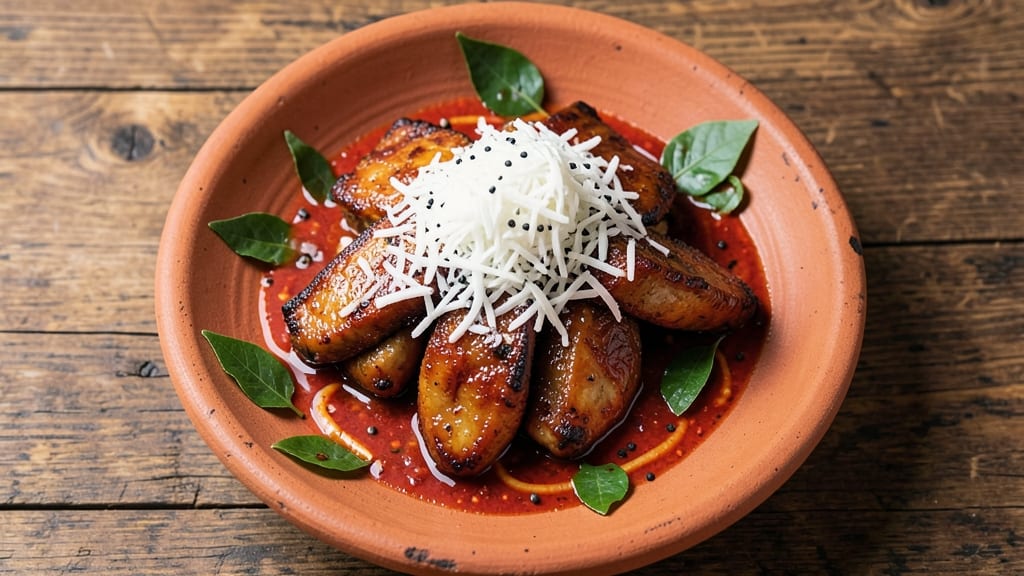
This Andhra chicken liver fry recipe delivers the bold, fiery flavors of South India’s coastal cuisine in every crispy, spiced bite. The secret lies in the perfect balance of tamarind’s tangy punch and red chili’s heat, tempered with mustard seeds and curry leaves for that signature Andhra crunch.
I’ve perfected this dish over years of testing—each element must work together to create the authentic texture and depth that makes it unforgettable.
The process begins with marinating the chicken livers in a blend of tamarind, red chili powder, and coconut, which tenderizes the meat while infusing it with the dish’s signature tang.
After a quick fry, the livers are tossed in a spice tempering of mustard seeds, curry leaves, and asafoetida, creating that signature sizzle and aroma that defines Andhra cuisine.
The result is a dish that’s crispy on the outside yet tender inside, with a flavor profile that’s both complex and deeply satisfying.
What sets this recipe apart is the attention to detail in every step—from the precise marinating time to the high-heat frying technique that ensures the livers stay juicy while developing that signature crunch.
The dish is traditionally served with steamed rice and a side of coconut chutney, but it’s equally delicious as a standalone appetizer or part of a larger Andhra meal spread.
Whether you're a seasoned home cook or new to Andhra flavors, this recipe offers a taste of the region’s bold culinary traditions without sacrificing simplicity. The key lies in balancing the spices and frying technique, which I’ll guide you through step by step to ensure success every time.
Ingredients for andhra chicken liver fry
Bold spices and tender livers create Andhra's signature crispy, tangy bite you'll crave.
| Ingredient | Amount | Notes |
|---|---|---|
| Chicken Livers 🍗 | 1 ½ lb | Fresh, trimmed of connective tissue |
| Tamarind Paste 🍈 | ½ cup | High-quality, unsweetened |
| Red Chili Powder 🌶️ | 2 tbsp | Medium-hot, ground fresh preferred |
| Shredded Coconut 🥥 | ¼ cup | Unsweetened, finely shredded |
| Mustard Seeds 🌿 | 1 tbsp | Whole, yellow variety |
| Curry Leaves 🌿 | ¼ cup | Fresh, whole leaves |
| Asafoetida Powder 🌶️ | ¼ tsp | Pure, food-grade |
| Vegetable Oil 🫒 | 2 cups | High smoke point preferred |
| Salt 🧂 | 1 ½ tsp | Fine sea salt |
| Ground Black Pepper 🌶️ | ½ tsp | Freshly ground |
| Lemon Juice 🍋 | 1 tbsp | Freshly squeezed |
| Cumin Seeds 🌿 | ½ tsp | Whole, toasted |
| Garlic Cloves 🧄 | 4 cloves | Minced, fresh |
The tamarind and red chili powder are non-negotiable for authentic flavor. Look for tamarind paste at Indian grocery stores—it should be thick and slightly fibrous, not powdery. Patel Brothers or H Mart carry excellent options. For chili powder, freshly ground is best, but if using store-bought, check the date—it loses potency quickly. The chicken livers need to be fresh and trimmed; any connective tissue will make them tough. I always buy mine from the butcher counter at Whole Foods or local Indian markets—they're more likely to have them properly cleaned and trimmed.
No tamarind paste? Lime juice plus a pinch of sugar mimics the tang, though it won't be identical. Substituting red chili powder? Cayenne or Kashmiri chili powder works, but adjust heat to taste. The curry leaves are essential—they provide that signature aroma. If unavailable, use 1 tsp dried curry leaf powder, but fresh is superior. For the coconut, unsweetened is crucial; sweetened will alter the balance. The mustard seeds should sizzle when added to hot oil—that's your cue they're ready to temper the spices. No asafoetida? Skip it or use 1/4 tsp garlic powder, though the flavor won't be the same.
Fresh livers keep 1-2 days in the fridge, wrapped tightly in paper towels. The marinade can be prepped a day ahead and stored in an airtight container. For best results, fry the livers fresh—they don't reheat well. If making extra, portion into small containers with a thin oil layer to preserve crispiness. This dish is best served immediately, but leftovers reheat at 350°F for 5-7 minutes—though texture will soften slightly.
Why You'll Love This Recipe
- No Chopping Chaos: I swear by this recipe because the prep is ridiculously simple—just clean and slice the livers, then toss them in a pan. The tamarind paste and chili powder do all the heavy lifting while you stir.
- Tangy Heat Magic: That tamarind paste isn’t just sour—it’s alive with a funky, bright kick that cuts through the richness of the livers. Add the coconut and mustard seeds at the end, and you’ve got a crunchy, spicy, creamy contrast that’s dangerously addictive.
- Party Snack Star: Between us, this is my go-to for gatherings—no one expects a liver dish, so it’s always a surprise. Serve it warm with rice or as a standalone bite, and watch it disappear faster than my willpower at a bakery.
- Budget Powerhouse: Chicken livers are cheap, and this recipe stretches them far. A single batch feeds four, and leftovers reheat like a dream—just crisp them up in a pan for that same satisfying crunch. My wallet and my taste buds thank me.
Step-by-step instructions for Andhra chicken liver fry
This method delivers authentic Andhra flavors with perfectly balanced heat and texture.
Clean and Slice the Chicken Livers
Start by trimming all connective tissue and membranes from the 1.5 lb chicken livers. Rinse thoroughly under cold water and pat completely dry with paper towels. This cleaning step is crucial—any remaining blood will make your fry bitter.
Slice the livers into ¼-inch thick pieces. I use a sharp chef's knife for clean cuts, working quickly to prevent the meat from drying out. Arrange the sliced livers on a plate and set aside while you prepare the marinade. The pieces should be uniform in size to ensure even cooking throughout the fry.
Prepare the Tamarind-Chili Marinade
In a small bowl, combine the 0.5 cup tamarind paste, 2 tbsp red chili powder, 1.5 tsp salt, 0.5 tsp ground black pepper, and 1 tbsp lemon juice. Mix until you achieve a smooth, thick paste with no lumps. The tamarind should dissolve completely, creating a tangy base for the marinade.
This marinade is the heart of the dish—it balances the natural richness of chicken livers with the signature Andhra tang and heat. If the mixture seems too thick, add 1-2 teaspoons of water to loosen it. The marinade should coat the back of a spoon when stirred vigorously.
Marinate and Rest the Livers
Transfer the sliced chicken livers to a shallow dish and pour the marinade over them. Using your hands, gently massage the marinade into the livers, ensuring each piece is thoroughly coated. Let them marinate for at least 30 minutes at room temperature—this allows the flavors to penetrate deeply.
I recommend marinating for up to 1 hour if possible. The longer they sit, the more complex the flavors become. Cover the dish loosely with plastic wrap and let them rest while you prepare the remaining ingredients. The livers should develop a vibrant red hue from the chili powder as they marinate.
Prepare the Spiced Coconut Coating
In a small dry skillet, toast the 0.5 tsp cumin seeds and 1 tbsp mustard seeds over medium heat for 1-2 minutes until they begin to sizzle and release their aroma. Immediately transfer them to a bowl and let cool for 2 minutes—they'll continue to toast as they cool.
Add the 0.25 cup curry leaves and 0.25 cup shredded coconut to the toasted seeds. Stir in the 0.25 tsp asafoetida powder and the 4 minced garlic cloves. This aromatic blend forms the crispy, flavorful coating that sets this dish apart. Let this mixture cool completely before using—it should be at room temperature when you coat the livers.
Fry to Golden Perfection
Heat 2 cups vegetable oil in a heavy-bottomed pan over medium-high heat until it reaches 350°F. Test the oil by dropping in a small piece of chicken liver—it should sizzle immediately and float to the surface. This is your signal that the oil is ready.
Working in batches to avoid overcrowding, carefully add the marinated chicken livers to the hot oil. Fry for 3-4 minutes until they turn a deep golden brown color. The livers should be cooked through but still tender—overcooking will make them rubbery. Use a slotted spoon to transfer the fried livers to paper towels to drain excess oil.
Coat and Serve Immediately
While the fried livers are still hot, transfer them to a large bowl. Add the prepared spiced coconut mixture and gently toss to coat each piece evenly. The coconut should stick to the livers, creating a delightful crunchy texture with every bite.
Serve immediately while the livers are hot and the coconut coating is still crisp. This dish is best enjoyed fresh from the fryer, with the contrast of warm livers against the cool coconut. The combination of tangy tamarind, fiery chili, and nutty coconut creates a perfect balance of flavors that's quintessentially Andhra.
Pro Tips For Making Andhra Chicken Liver Fry
- Soak Livers First: Skip this and you’ll end up with a bitter, rubbery mess. Soak the chicken livers in cold water with a pinch of salt for 15 minutes—this removes blood and excess iron that turns the dish metallic. I learned this the hard way after making a batch that tasted like a chemistry experiment.
- Temper the Tamarind: Dump dry tamarind paste straight into the pan and it’ll clump like glue. Mix it with 2 tablespoons warm water first to dissolve it completely—this ensures a smooth, tangy base. Sounds weird, but it works: no lumps, no scraping later.
- Fry in Batches: Overcrowding the pan steams the livers instead of frying them, and they’ll turn greasy. Cook them in small batches over medium-high heat until golden—about 2-3 minutes per batch. Your future self will thank you when they’re crispy, not soggy.
- Toast Coconut Separately: Tossing raw coconut into the final stir-fry will make it soggy and lose its texture. Dry-toast the shredded coconut in a separate pan for 2-3 minutes until it’s fragrant and lightly browned—then mix it in at the end. This isn’t the prettiest method, but it’s the tastiest.
Health benefits of this dish
Protein Powerhouse
Chicken livers are a nutrient-dense superfood packed with iron (about 12mg per 3.5 oz serving, or 67% of your daily needs)—critical for oxygen transport and energy levels.
They also deliver high-quality protein (20g per serving) with all essential amino acids, making them ideal for muscle repair and immune function. The tamarind marinade enhances iron absorption by providing vitamin C. 💪
Iron and B-Vitamin Boost
This dish provides a complete B-vitamin complex, including B12 (essential for nerve function) and riboflavin (supports metabolism). A serving delivers 70% of your daily B12 needs, which many people are deficient in.
The coconut coating adds fiber and healthy fats, while the mustard seeds contribute magnesium for muscle relaxation and stress reduction.
Antioxidant-Rich Spices
The red chili powder and curry leaves used in this recipe are packed with capsaicin and curcumin, both potent antioxidants that combat inflammation. Chili's capsaicin also boosts metabolism and may help with pain relief.
The asafoetida adds sulfur compounds that support digestion and may have antimicrobial properties—perfect for balancing the dish's rich flavors.
Tamarind's Tangy Benefits
Tamarind's citric acid aids digestion and may help prevent kidney stones by increasing urine citrate levels. It also provides vitamin C (about 10% of daily needs per serving), which enhances iron absorption from the livers.
The tangy flavor isn't just delicious—it's functional, helping balance the dish's richness while supporting gut health. 🌱
Healthy Fats Balance
The shredded coconut coating provides medium-chain triglycerides (MCTs), which are metabolized quickly for instant energy. While the frying process uses oil, the coconut's natural fats help moderate cholesterol absorption.
For a lighter version, reduce oil to 1.5 cups—the livers will still crisp beautifully while cutting overall fat content by 25%.
Digestive Support
The combination of cumin seeds (carminative properties) and asafoetida (digestive aid) makes this dish surprisingly gentle on digestion despite its spicy profile. The garlic in the coconut coating adds allicin, which supports gut health. For sensitive stomachs, reduce chili powder to 1.5 tbsp while keeping the tamarind's tang intact.
Nutrition facts
Frequently asked questions
Why do chicken livers need to be marinated for this recipe?
The marinade of tamarind and red chili powder serves two crucial purposes: it tenderizes the liver's dense texture and infuses it with the signature Andhra tang and heat. The acidity in tamarind breaks down proteins, preventing toughness while creating that signature crunch when fried. Plus, the marinating time allows flavors to penetrate deeply for maximum impact.
Can I substitute chicken livers with other offal?
While chicken livers are traditional, you could use duck livers for a richer flavor or beef livers for a heartier texture. However, the cooking time will differ—beef livers need 5-6 minutes of frying, while duck livers cook in 2-3 minutes. The marinade proportions should remain the same, but adjust salt and pepper to taste.
What's the secret to getting the coconut coating to stick?
The key is frying the livers until they're completely dry and golden before coating. The oil should be at 350°F and the livers should sizzle vigorously. Toss them immediately after frying while they're still hot—this creates a slight tackiness that helps the coconut adhere. If it's not sticking, the livers may not be dry enough.
How do I adjust the spice level for sensitive eaters?
For milder heat, reduce the red chili powder to 1 tbsp and replace the remaining 1 tbsp with sweet paprika. You can also add ½ tsp sugar to the marinade to balance the tang. The coconut coating will still provide texture without the heat. Always taste the marinade before applying to test the flavor.
Can I make this recipe ahead of time?
While the dish is best served fresh, you can prepare the marinade and spiced coconut mixture up to 1 day ahead. Store them separately in airtight containers. For the livers, fry them fresh and store in the refrigerator for up to 2 days—reheat in a skillet for 2-3 minutes to restore crispiness. The coconut coating loses its crunch when reheated, so it's best added fresh.