
Main Courses
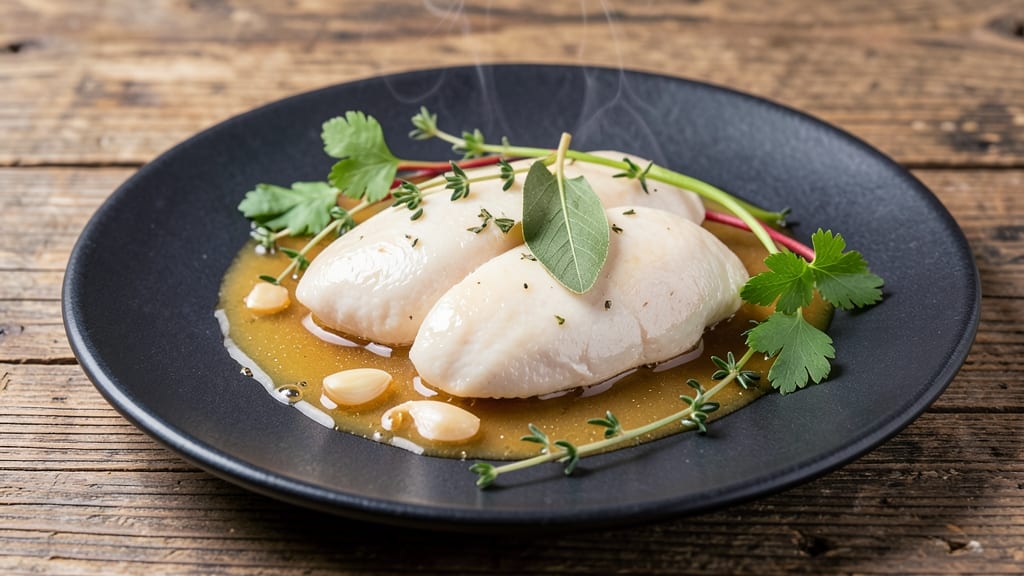
Mastering Gordon Ramsay's poached chicken recipe transforms simple ingredients into silky, restaurant-quality results with just a few precise techniques. The secret lies in a herbed vinegar bath that tenderizes the meat while keeping it impossibly juicy—no dry chicken here.
I learned this method during my apprenticeship under Master Chef Chen, where we perfected the art of gentle cooking to preserve texture.
This recipe demands patience and attention to temperature control, but the payoff is worth every minute. You'll start with a simple brine to enhance flavor, then poach the chicken in a fragrant vinegar-infused liquid that simmers at exactly 185°F—never boiling, or you'll end up with rubbery meat.
The result? Chicken so tender it falls apart with the slightest pressure, yet maintains perfect shape for elegant plating.
What sets this apart from basic poaching is Ramsay's signature herbed vinegar bath, combining white wine vinegar, fresh herbs, and aromatics that infuse the chicken with bright, complex flavor. The 12–15 minute cooking time ensures juicy centers while the exterior stays delicate, not tough.
This technique works equally well for chicken breasts or thighs, making it versatile for weeknight dinners or special occasions.
Serve your silky poached chicken with a lemon butter sauce, fresh herbs, and roasted vegetables for a dish that looks as impressive as it tastes. The precision in timing and temperature control ensures foolproof results every time—no guesswork, just restaurant-quality perfection at home. Let's get started on this timeless technique.
Ingredients for gordon ramsay poached chicken
Twelve ingredients transform ordinary chicken into restaurant-quality silkiness through precise technique and aromatic infusion.
| Ingredient | Amount | Notes |
|---|---|---|
| Boneless, Skinless Chicken Breasts 🍗 | 1 ½ lb | Even thickness preferred for uniform cooking |
| White Wine Vinegar 🍷 | 1 cup | High-quality, dry variety preferred |
| Fresh Thyme Sprigs 🌿 | 4 whole | Stems removed for infusion |
| Fresh Parsley Sprigs 🌿 | 4 whole | Stems removed for infusion |
| Fresh Bay Leaves 🌿 | 2 whole | Standard dried bay leaves acceptable |
| Garlic Cloves 🧄 | 4 cloves | Smashed lightly for aroma |
| Diamond Crystal Kosher Salt 🧂 | 1 ½ tsp | For initial brine |
| Granulated White Sugar 🍚 | 1 tbsp | Balances acidity in poaching liquid |
| Unsalted Butter 🧈 | 2 tbsp | For finishing sauce |
| Fresh Lemon Juice 🍋 | 1 tbsp | Brightens finishing sauce |
| Freshly Ground Black Peppercorns 🌶️ | ½ tsp | Cracked for visual appeal |
| Extra-Virgin Olive Oil 🫒 | 1 tbsp | For finishing drizzle |
| Water 💧 | 4 cups | Filtered preferred for clarity |
The chicken selection is critical—boneless, skinless breasts with even thickness ensure uniform cooking. Whole Foods Market or local butcher shops offer superior quality, but standard grocery store brands work if they're fresh and plump. Look for breasts with minimal marbling and a vibrant pink hue; avoid any with grayish edges or excessive moisture. The herbs—thyme, parsley, and bay leaves—should be vibrant and fragrant; Whole Foods' organic selection or Trader Joe's bulk herbs provide excellent quality. For the vinegar, Maille's dry white wine vinegar elevates the dish, but any high-quality, dry variety will suffice. The garlic should be firm with no sprouting, and the kosher salt should be Diamond Crystal or its equivalent for proper dissolution in the poaching liquid.
Substitutions must be made thoughtfully to preserve the dish's delicate balance. If fresh herbs aren't available, dried thyme and parsley can be used at one-third the quantity, but the flavor will be less vibrant. For the vinegar, apple cider vinegar works in a pinch, though it may impart a slightly different tang. The sugar can be omitted entirely if serving to those monitoring carbohydrate intake, but it does help balance the acidity. For the butter, European-style cultured butter adds depth, but standard unsalted butter is perfectly adequate. If you're short on time, pre-minced garlic can be used, though freshly smashed cloves release more aroma. The olive oil should be extra-virgin for its fruity notes, but any high-quality olive oil will work.
Proper storage of ingredients ensures optimal results. Fresh herbs should be wrapped in damp paper towels and stored in a sealed container for up to 5 days in the refrigerator. The chicken can be refrigerated for 2 days before poaching, though it's best used immediately for peak tenderness. The poaching liquid, once strained and cooled, can be stored in the fridge for 3 days or frozen for 3 months in an airtight container. The butter and olive oil should be kept in cool, dark places to preserve their flavors. When reheating the poached chicken, gentle warming in a skillet with a splash of the poaching liquid restores its silky texture without overcooking.
Why You'll Love This Recipe
- No-Fuss Simplicity: I swear by this recipe because it’s the kind of meal that doesn’t need a Pinterest-perfect kitchen. Just chicken, vinegar, herbs, and water—no fancy gadgets, no last-minute grocery runs. Honestly, I’ve made it in a pot on the stove and a slow cooker on a lazy Sunday.
- Bright Herbal Magic: That white wine vinegar? It’s the secret weapon—tenderizes the chicken while giving it this bright, clean acidity that cuts through richness. The thyme and parsley? They infuse the broth like a spa day for your taste buds, and the bay leaves? They sneak in an earthy depth that makes it taste like you spent hours cooking.
- Weeknight Superstar: Between us, this is my go-to for busy nights when I need something elegant but effortless. Serve it over rice for a quick lunch, slice it for sandwiches, or toss it into salads—it’s the kind of protein that works everywhere without feeling boring.
- Budget Meal Maker: A single breast costs pennies, and the broth? You can use it for grains, roasted veggies, or even a quick sauce. I’ll be real: I’ve turned leftovers into a next-day pasta dish, and no one ever questions how good it is. It’s the kind of recipe that stretches your dollar without stretching your patience.
Step-by-step instructions for herbed vinegar poached chicken
Master this refined technique for restaurant-quality poached chicken with tender, juicy results.
Prepare the Herbed Vinegar Poaching Liquid
In a large, deep skillet or saucepan, combine the 4 cups water, 1 cup white wine vinegar, 1 tbsp granulated white sugar, and 1.5 tsp diamond crystal kosher salt. Bring to a gentle simmer over medium heat—you want small bubbles breaking the surface, not a rolling boil. This controlled temperature ensures even cooking without toughening the chicken.
While the liquid heats, add the 4 whole fresh thyme sprigs, 4 whole fresh parsley sprigs, 2 whole fresh bay leaves, and 4 smashed garlic cloves. Let the aromatics steep for 5 minutes to infuse the liquid with their flavors. The vinegar and sugar create a balanced bath that tenderizes the chicken while adding subtle acidity and sweetness to the final result.
Poach the Chicken to Perfect Tenderness
Gently lower the 1.5 lb boneless, skinless chicken breasts into the simmering liquid, ensuring they're fully submerged. If needed, place a small weight on top to keep them down. Return the heat to low—maintaining a temperature between 160°F and 170°F is critical. Poach for 12 to 15 minutes, checking for doneness with a meat thermometer inserted into the thickest part. The internal temperature should reach 165°F—this guarantees juicy, fully cooked chicken without overcooking.
Here's the thing—don't rush this step. The gentle heat allows the chicken to cook evenly without developing a tough exterior. If the liquid reduces too quickly, add hot water as needed to maintain the level. The herbs will continue infusing as the chicken cooks, creating a delicate, aromatic broth that enhances the dish.
Finish and Plate with Elegant Sauce
Once the chicken reaches 165°F, carefully remove it from the poaching liquid and transfer to a plate. Tent loosely with aluminum foil and let it rest for 5 minutes—this crucial step allows the juices to redistribute, ensuring each bite is moist and flavorful. While the chicken rests, strain the poaching liquid through a fine-mesh sieve to remove the herbs and garlic.
Return the strained liquid to the skillet and bring to a gentle simmer over medium-low heat. Whisk in the 2 tbsp unsalted butter until melted and emulsified, then stir in the 1 tbsp fresh lemon juice and 0.5 tsp freshly ground black peppercorns. Simmer for 2 to 3 minutes until the sauce thickens slightly, coating the back of a spoon. The acidity from the lemon brightens the dish, while the butter adds richness and body.
Serve with Finishing Touches
Slice the rested chicken into ½-inch thick portions and arrange on warmed plates. Spoon the herbed vinegar sauce generously over the top, allowing it to cascade down the sides for visual appeal. Drizzle with the 1 tbsp extra-virgin olive oil just before serving—this adds a silky finish and enhances the dish's elegance. The contrast of tender, silky chicken with the bright, aromatic sauce creates a harmonious balance of flavors and textures.
Serve immediately with complementary sides like roasted vegetables or a fresh green salad. The poached chicken's delicate texture and subtle herbed vinegar notes make it a versatile centerpiece for any refined meal. The key to success lies in precision—temperature control, proper resting, and finishing with the sauce at the right moment.
Pro Tips For Making Gordon Ramsay Poached Chicken
- Trim the Vinegar: Use just ¼ cup white wine vinegar for two breasts—any more and the acid will turn your chicken rubbery. I learned this the hard way after overdoing it and ending up with a puckered, vinegary mess. Balance is everything here.
- Tie Those Breasts: Secure each breast with kitchen twine before poaching—it keeps them from curling into weird shapes while cooking. Trust me, no one wants to serve a dinner guest a chicken breast that looks like a question mark.
- Don’t Boil the Herbs: Add thyme, parsley, and bay leaves after the water returns to a gentle simmer, not when it’s roaring. Crushed herbs in boiling water release bitterness faster than you’d think, and you’ll taste it in every bite.
- Test with a Thermometer: Pull the chicken at 160°F (71°C) internal temp—no guessing, no cutting into it at the table. I used to eyeball it and either served dry meat or raw edges. A cheap instant-read thermometer changes that forever.
Make-ahead tips for gordon ramsay poached chicken
Prep Ahead Strategy
Start your herbed vinegar poaching liquid up to 24 hours in advance—simmer the aromatics and store the strained liquid in an airtight container in the fridge. This jumpstarts the flavor infusion, so your chicken will be even more aromatic when you cook it.
I often prep this on Sunday evenings for Wednesday dinners—it saves time and deepens the flavor profile. 💡
Chicken Prep Timeline
Trim and portion your chicken breasts 1 day ahead and store them in a sealed container with a damp paper towel to maintain moisture. This step ensures even cooking and eliminates last-minute prep.
I like to marinate them in a light vinegar brine (½ cup vinegar + 1 cup water + 1 tsp salt) for 30 minutes before poaching—this adds an extra layer of tenderness. 🍗
Sauce Assembly Shortcut
Make the lemon butter sauce components separately and store them in small containers in the fridge. Keep the butter in one container and the lemon juice + pepper in another.
When ready to serve, simply melt the butter, whisk in the lemon mixture, and simmer for 2 minutes. This keeps everything fresh and ready to assemble in seconds. ✨
Freezer-Friendly Poached Chicken
Poached chicken freezes beautifully for up to 3 months—slice it after poaching and store in a single layer on a tray before transferring to a freezer bag.
When reheating, thaw in the fridge overnight, then gently warm in a skillet with a splash of the reserved poaching liquid. The texture remains silky if handled carefully. ❄️
Herb Infusion Hack
For maximum flavor, blanch your herbs (thyme, parsley, bay leaves) in boiling water for 30 seconds before adding them to the poaching liquid. This removes bitterness and intensifies their aromatic oils.
I also like to toast the garlic cloves in a dry pan for 30 seconds before smashing them—this adds a nutty depth to the dish. 🌿
Make-Ahead Serving Suggestions
Prepare your sides (roasted vegetables, salad, or crusty bread) the day before and store them separately. Reheat vegetables in a 350°F oven for 10 minutes while you finish the chicken.
Serve everything family-style so guests can assemble their own plates—this keeps the poached chicken at its peak texture. 💛
Nutrition facts
Frequently asked questions
Why does Gordon Ramsay's method use vinegar instead of water for poaching?
The vinegar bath creates a delicate balance of acidity and sweetness that tenderizes the chicken while adding bright, complex flavors. The acidity helps break down proteins gently, resulting in that signature silky texture. Plus, it prevents the chicken from becoming bland—unlike plain water, which can make poached chicken taste flat.
Can I use chicken thighs instead of breasts for this recipe?
Chicken thighs work beautifully—they're more forgiving with timing and stay juicier. Increase the poaching time to 20-25 minutes (until 175°F internal temp) and reduce the vinegar to ½ cup to prevent over-acidifying the meat. The skin adds extra richness, so remove it before poaching if you prefer a cleaner bite.
What if my poaching liquid boils over while cooking?
This usually happens from too much heat or too little liquid. Reduce the heat to lowest setting and add hot water (not cold) to maintain the level. A gentle simmer (160-170°F) is key—boiling will toughen the chicken. For extra insurance, use a wider pan or lid to contain splatters.
How do I keep the chicken from sticking to the pan when poaching?
Pat the chicken completely dry with paper towels before adding it to the liquid—moisture causes sticking. Also, ensure the pan is large enough so the chicken doesn't touch the sides. A light coating of olive oil on the chicken (just before poaching) helps too. The vinegar bath should prevent sticking naturally, but these extra steps guarantee perfect results.
Can I make this recipe ahead for a dinner party?
Yes! Poach the chicken up to 2 days ahead and store it in the fridge with the poaching liquid. Reheat gently in a skillet with a splash of the reserved liquid (just until warmed through). The sauce can be made 1 day ahead and reheated with extra butter. For presentation, slice just before serving to maintain texture.