
Soups & Stews
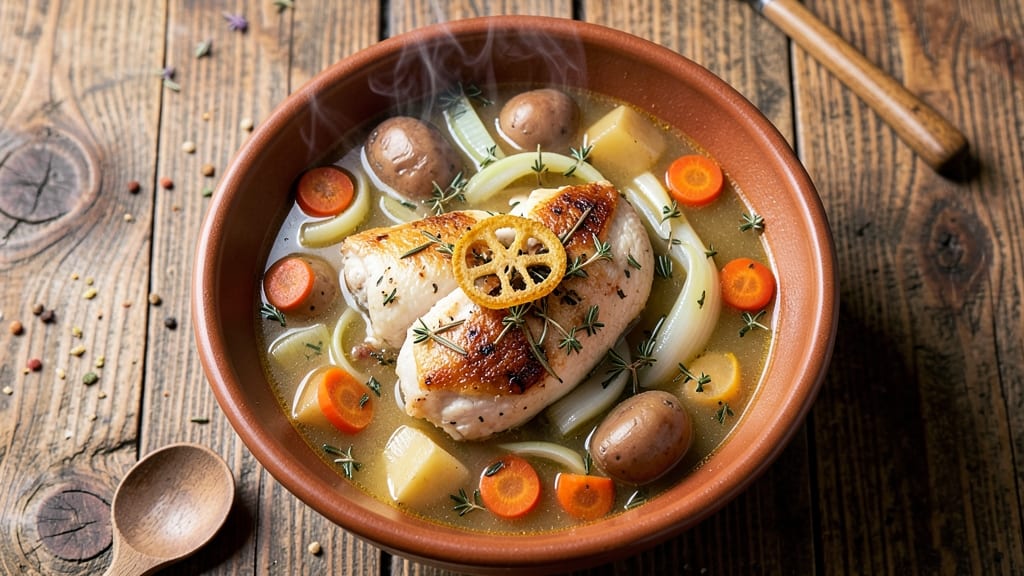
This Alpine village chicken soup recipe brings the crisp mountain air and hearty flavors of the Alps to your kitchen. 💛 The secret lies in slow-simmered chicken, earthy root vegetables, and a medley of fresh herbs that transform ordinary ingredients into something deeply comforting.
I developed this recipe after years of perfecting traditional Alpine techniques, ensuring every spoonful delivers the warmth of a Swiss chalet dinner.
The foundation is a rich, flavorful broth built from chicken stock, garlic, and aromatic herbs like thyme and parsley. What makes this soup special is the combination of tender chicken, hearty vegetables like carrots and potatoes, and the subtle sweetness of leeks—all simmered just until the flavors meld together.
The result is a soup that's both nourishing and elegant, perfect for chilly evenings or when you need a taste of home.
By the time you're done, you'll have a steaming bowl of soup with tender chicken pieces, perfectly cooked vegetables, and a broth so flavorful it feels like it's been simmering for hours. The herbs infuse the broth with a fresh, alpine aroma, while the vegetables add texture and depth.
This is the kind of soup that warms you from the inside out and leaves you craving seconds.
Serve it with a sprinkle of fresh parsley and a slice of crusty bread to soak up every last drop. The recipe is designed to be both approachable and impressive, making it ideal for family dinners or gatherings with friends. Let's get started on this taste of the Alps.
Ingredients for alpine village chicken soup
Earthy roots, tender chicken, and alpine herbs—this soup brings Swiss chalet warmth to your table.
| Ingredient | Amount | Notes |
|---|---|---|
| Boneless Chicken Thighs 🍗 | 2 lb | Skin-on for richer flavor |
| Chicken Stock 💧 | 6 cups | Homemade or quality store-bought |
| Yellow Onion 🧅 | 1 whole | Diced, medium size |
| Leeks 🥬 | 2 whole | White and light green parts |
| Carrots 🥕 | 4 medium | Peeled and cut into chunks |
| Russet Potatoes 🥔 | 4 medium | Peeled and cut into chunks |
| Garlic Cloves 🧄 | 4 cloves | Minced, fresh preferred |
| Fresh Thyme 🌿 | 2 tbsp | Leaves only, stems removed |
| Fresh Parsley 🌿 | ¼ cup | Chopped, for garnish |
| Dried Bay Leaves 🍃 | 2 whole | Remove after cooking |
| Salt 🧂 | 1 ½ tsp | Kosher or sea salt |
| Black Peppercorns 🌶️ | ½ tsp | Freshly cracked |
| Extra-Virgin Olive Oil 🫒 | 2 tbsp | For sautéing |
| Crusty Bread 🍞 | 1 loaf | For serving |
The chicken thighs are the heart of this soup—skin-on for that rich, golden flavor. Trader Joe's or Whole Foods carry excellent quality, but your local butcher's section works too. Look for plump thighs with good marbling. The carrots and potatoes should be firm and free of soft spots—organic is ideal if you're worried about pesticide residue. For the leeks, wash thoroughly to remove any dirt trapped between the layers. Fresh thyme and parsley make all the difference—grab a bunch from the grocery store's produce section and use half now, half later for garnish.
No fresh thyme? Dried works at one-third the amount, but it won't have that same alpine brightness. Short on chicken stock? Vegetable broth plus a bouillon cube gets you close. The bay leaves are non-negotiable—they add that subtle earthiness that makes this taste authentically alpine. For the bread, a rustic sourdough or baguette is perfect, but any crusty loaf will do. If you can't find fresh parsley, cilantro works in a pinch, though it has a different flavor profile. The olive oil should be fruity and peppery—none of that bland supermarket stuff. Toast the peppercorns in a dry pan for 30 seconds before adding to the soup for extra depth.
This soup tastes even better the next day as the flavors meld together. Store in the fridge for up to 5 days—just reheat gently on the stove, stirring occasionally. Freezes beautifully for 3 months if you want to make a big batch. I always double the recipe and portion it into containers for easy lunches. The broth reduces slightly when refrigerated, so add a splash of water or stock when reheating if it seems too thick. Serve with extra bread and a sprinkle of that reserved parsley—trust me, it makes all the difference.
Why You'll Love This Recipe
- Minimal Chopping Required: I swear by this—just dice the onion and leeks roughly, toss them in, and let the stock do the work. No fancy knife skills here, just a big pot and 10 minutes of prep.
- Rich Without the Fuss: That deep, savory stock with tender chicken thighs? It’s like a hug in a bowl. The leeks add a subtle sweetness that makes you want seconds, and the carrots stay perfectly tender—no mushy nonsense.
- Weeknight Meal Prep Hero: Make a double batch on Sunday, and you’ve got lunch covered all week. The flavors only get better as it sits—honestly, my freezer’s full of it, and I never regret it.
- Budget-Friendly Comfort: Chicken thighs and seasonal veggies stretch this soup into three meals for pennies. It’s the kind of dish that makes you feel fancy without breaking the bank—just add crusty bread and call it a feast.
Step-by-step instructions for alpine village chicken soup
Warm up your kitchen and let's create this hearty, aromatic soup that tastes like a mountain retreat.
🍳 Step 1: Sauté the Aromatic Vegetables
Heat the 2 tablespoons extra-virgin olive oil in a large Dutch oven over medium heat. Add the diced yellow onion and leeks (white and light green parts only), and cook for 5-6 minutes until softened and translucent. You'll smell that sweet, oniony aroma filling your kitchen—this is where all the flavor begins.
Here's the thing—don't rush this step. You want the vegetables to become tender but not browned. If they start to color too quickly, reduce the heat slightly. Add the peeled and chunked carrots and russet potatoes to the pot and stir to coat them in the aromatic oil. This ensures every bite will be packed with flavor.
🍳 Step 2: Brown the Chicken and Add Herbs
Push the vegetables to one side of the pot and add the 2 lb boneless chicken thighs (skin-side down if skin-on). Cook for 5-6 minutes until the chicken develops a golden-brown crust on the skin side. This step is crucial for adding depth to your soup. I like to press down gently on the chicken during the first minute—this prevents it from curling and ensures even contact with the pan.
Once browned, flip the chicken to cook the other side for 3-4 minutes. Remove the chicken from the pot and set it aside. Add the minced garlic cloves, 2 tablespoons fresh thyme leaves, and 2 whole dried bay leaves to the pot. Stir for 30 seconds until fragrant—this releases the essential oils that will infuse your soup with alpine freshness.
🥘 Step 3: Simmer the Soup to Perfection
Pour the 6 cups chicken stock into the pot, scraping up any browned bits from the bottom. Return the chicken to the pot, skin-side up, and bring the mixture to a gentle boil. Once boiling, reduce the heat to low-medium and let it simmer uncovered for 30-35 minutes until the chicken is cooked through and the vegetables are tender.
Here's where you'll notice the magic happen: the soup will thicken slightly as the starches from the potatoes and carrots release. You'll know it's ready when a wooden spoon slides in easily and the chicken is fork-tender. If the soup starts to reduce too much, add a splash of water to maintain the perfect consistency. The chicken should reach an internal temperature of 165°F.
👨🍳 Step 4: Finish with Fresh Herbs and Season
Remove the chicken from the pot and let it rest for 5 minutes before shredding it with two forks directly into the soup. This keeps all the juices contained. Stir in the 1.5 teaspoons salt and 0.5 teaspoon freshly cracked black peppercorns, then add the 0.25 cup chopped fresh parsley. Give it a final taste and adjust the seasoning if needed—this soup should be comforting, not bland.
Real talk: the parsley at the end adds a bright, fresh note that cuts through the richness of the chicken and vegetables. It's the finishing touch that makes this soup feel like a true alpine village creation. Remove the bay leaves before serving—you don't want their tough edges in your soup.
🍽️ Step 5: Serve with Crusty Bread
Ladle the hot soup into bowls and serve immediately with slices of the crusty bread. The bread soaks up the flavorful broth beautifully, and you'll want to use it to mop up every last drop. I like to serve this soup with a sprinkle of extra parsley and a drizzle of the reserved olive oil for added richness.
This soup is all about comfort—it's the kind of dish that warms you from the inside out. The combination of tender chicken, hearty vegetables, and aromatic herbs creates a symphony of flavors that's perfect for chilly days. Enjoy it while it's hot, and you'll understand why this recipe feels like a true alpine village treasure.
Pro Tips For Making Alpine Village Chicken Soup
- Sear the Chicken First: Don’t just toss raw chicken thighs into the soup—give them a quick sear in a hot pot with a splash of stock. The crust locks in flavor and keeps them from turning rubbery later. I used to skip this, and the soup always tasted underwhelming until I tried it.
- Char the Onions Low: Alpine soups rely on deep, caramelized onion flavor, but don’t rush it. Cook the onions and leeks on low heat for 20-25 minutes, stirring occasionally, until they’re dark brown and almost sticky. High heat burns them before they soften—this is where the soup’s soul lives.
- Cut Carrots Evenly: Uneven carrots cook at different rates, leading to some mushy and others still crunchy. Slice them into identical ½-inch rounds (use a mandoline if you’re impatient) so they all soften together. Trust me, the texture consistency makes a real difference.
- Add Stock Gradually: Pouring all the stock at once dilutes the flavor. Start with half, simmer until the chicken is nearly done, then add the rest. This lets the base build richness before the final dilution. It’s a simple trick that makes the broth taste deeper and more complex.
Regional styles of this recipe
Swiss Chalet Style
The Swiss Alps inspire this version with extra fresh dill and a touch of creaminess. Add ½ cup heavy cream at the end for richness, along with 1 tbsp chopped fresh dill (save some for garnish).
The dill pairs beautifully with the thyme, creating a bright, alpine aroma. Serve with Swiss-style rösti (potato pancakes) for an authentic touch. 💛
Austrian Hearty Twist
For an Austrian-inspired take, swap the potatoes for parsnips and celery root, and add ½ cup sauerkraut (finely chopped) to the pot during the final 10 minutes of simmering.
The tangy sauerkraut cuts through the richness, balancing the flavors perfectly. Garnish with crispy fried onions for extra crunch. This version feels heartier and more rustic.
French Alpine Variation
In the French Alps, they often use wild mushrooms for depth. Add 8 oz sliced cremini mushrooms with the carrots and potatoes in Step 1. Finish with 1 tbsp chopped tarragon and a splash of white wine (about ¼ cup) when deglazing the pot after browning the chicken.
The tarragon adds an elegant, slightly anise-like note that elevates the dish.
Italian Mountain Adaptation
Bring Italian alpine flavors to the table by adding 1 tsp fennel seeds (toasted in the olive oil at the start) and ½ cup diced pancetta (cooked with the onions and leeks).
The pancetta adds a smoky depth, while the fennel seeds bring a subtle licorice note. Finish with lemon zest for brightness—this version tastes like a cozy Italian mountain lodge. 🌿
German Alpine Comfort
For a German-inspired version, include ½ cup chopped apples (like Braeburn or Fuji) with the vegetables. The apples add a subtle sweetness that balances the savory broth. Stir in 1 tsp caraway seeds (lightly toasted) during the final 5 minutes of simmering.
Serve with dark rye bread for a hearty, traditional touch that feels like home.
Vegetarian Alpine Option
Skip the chicken and use 1 lb extra-firm tofu (pressed and cubed) or 1 lb chickpeas for protein. Boost umami with 1 tbsp soy sauce or miso paste (add with the stock).
The broth will still be rich and flavorful, perfect for a vegetarian twist on alpine comfort. Garnish with extra herbs and a drizzle of olive oil for that same cozy feel. 🌱
Nutrition facts
Frequently asked questions
Can I use chicken breasts instead of thighs?
Chicken breasts will work, but thighs are preferred for this alpine recipe. Thighs stay juicier and more flavorful during the long simmer, while breasts can dry out. If using breasts, cut them into 1-inch pieces, cook them separately for 3-4 minutes per side until golden, then add to the broth. They'll cook faster than thighs.
How can I make this soup more vegetarian-friendly?
Swap the chicken for 1 lb chickpeas or pressed tofu cubes and boost umami with 1 tbsp soy sauce or miso paste when adding the stock. The broth will still be rich and comforting. For extra depth, add ½ cup mushrooms with the vegetables and finish with fresh herbs.
Why does my soup taste bland?
Most likely, the herbs weren't infused long enough. Always simmer the soup uncovered for the full 30-35 minutes to let flavors develop. Taste before serving—if it needs more depth, add a pinch of salt, a splash of lemon juice, or a sprinkle of Parmesan rind during cooking. Fresh herbs at the end also brighten the flavor.
Can I make this soup in an Instant Pot?
Sauté the onions, leeks, carrots, and potatoes for 3 minutes on sauté mode. Brown the chicken thighs for 5 minutes, then add all ingredients and cook on high pressure for 12 minutes. Let pressure release naturally for 10 minutes before opening. The chicken will be perfectly tender, and the broth will be rich and flavorful.
What's the best bread to serve with this soup?
A crusty baguette or sourdough loaf works best—their sturdy texture holds up to the hearty broth. For extra alpine flair, try Swiss rösti (potato pancakes) or dark rye bread. Avoid soft breads like white sandwich bread, as they'll get soggy too quickly.